The most humble tool in your tying tool collection is most likely your dubbing needle or bodkin. Still it’s one of the most useful tools.
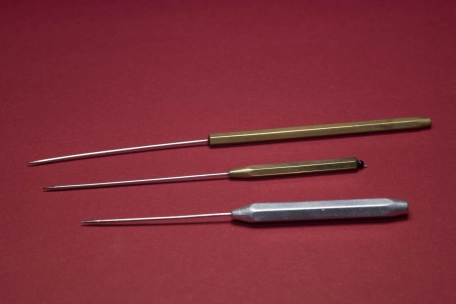
I honestly don’t know why a dubbing needle is called a dubbing needle and not a varnishing needle, because it’s my impression that the far most common usage for this tool is to apply varnish.
I also use mine for poking holes and separating hairs or feather barbs, but I actually very rarely use it for anything involving dubbing.
The word bodkin, used by many, is more suitable. One of its meanings is “a sharp slender instrument for making holes in cloth”, which may not describe the way we use it, but more precisely describes what it is.
A handle with a needle
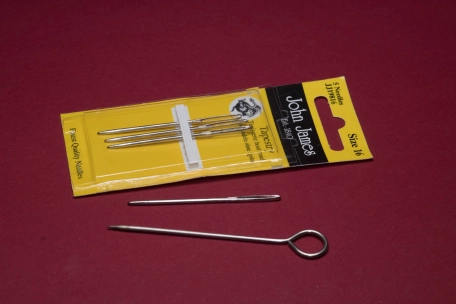
It is in all essence a needle. It’s absolutely possible to just use a large needle, but for the sake of convenience we mostly use a needle mounted in a handle.
The handle is typically the thickness of a pen or a pencil, and the needle itself is often fairly thick and also blunt – like a large darning needle.
DIY
You can buy plenty of models of dubbing needles in flyshops and online, and they are usually simple and inexpensive tools, so for most of us, it’s an easy choice to pick up a ready-made one.
But if you have a piece of dowel wood and a large, blunt needle, it’s an obvious DIY-project to make your own.
Drill or poke a small hole in the end of a suitable piece of wood, add a bit of glue and press the head of the needle into the handle – et viola! You have a bodkin.
You can sand the wood a bit and maybe give it some varnish or oil, but the plain wood will do just fine for many years.
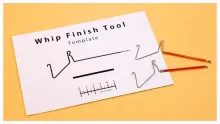
Half hitch tool
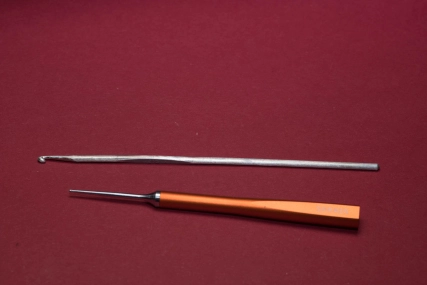
Some commercial bodkins server several purposes, and the one I have found most useful is a feature in my first ever bodkin, a simple and cheap one with a hexagonal aluminum handle.
It has a hole in the rear end of the handle that serves as a neat half hitch tool, which I use quite a lot.
Fancy models
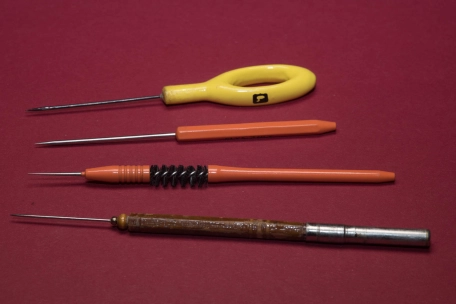
As already mentioned you can buy dubbing needles in many variations, and while some simple Pakistani types are both simple and inexpensive (and work well), you can buy some models that you will have to pay 30, 40 and even 50 dollars for. Most of them are beautiful and well made tools, but with all due respect, they are still just a needle in a handle.
But of course any tying tool manufacturer with a bit of self respect has to have a needle in the tool selection, and many are actually very nice and quite reasonably priced.
Its use
As already mentioned it’s a pretty omnipotent tool.
- It can apply varnish.
- It can poke holes.
- It can clean out underfur from hair like fox, deer and tanuki.
- It can separate materials – both before and after they are tied in.
- It can salvage hairs, barbs and other things that have been caught under rib or other materials.
- It can help flattening thread by being run up and down the unspun thread.
- It can help smoothen floss bodies, either using the side of the needle or the side of the handle.
- It can clean out stray varnish in hooks’ eyes when it’s dry and hard.
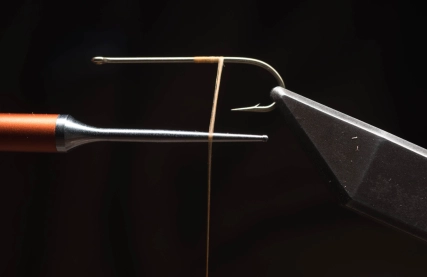
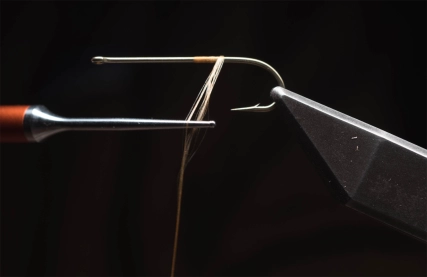
- It can also split thread. Flatten a suitable thread (not all threads split well) passing it over the needle, and lay the flat thread over a finger, and the tip of a bodkin can normally easily separate it in two. It’s in this use that you realize that a bodkin doesn’t need to be needle sharp, but actually works equally well, and sometimes better, if it’s a bit blunt. If your needle is unnecessarily sharp, simply file it down with some fine sandpaper or a file.
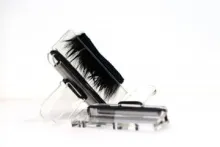
It can actually tease out dubbing, although I do find a Velcro brush to be a better tool for that, but sometimes you may need a more precise tool, and then the needle is your friend.
Cleaning
Once you are done varnishing, you will want to clean off the remaining varnish. This will keep it from building up and making the needle gooey and thick. A clean needle will both pick up and release new varnish more easily and in a much more controlled manner.
You can buy tools for cleaning the needle, but it’s also another of these small DIY projects that you can dive into. We have an article - DIY bodkin cleaner - that describes it. It’s not exactly rocket science.
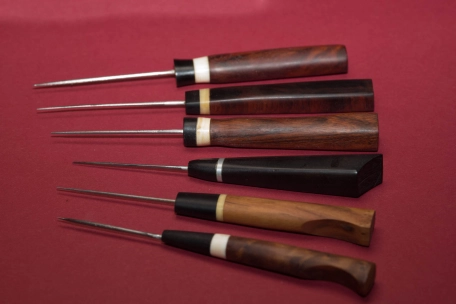
My own collection
I have a close to crazy number of dubbing needles! Yes, I know that most people will probably think that I have a crazy amount of almost anything related to fly tying and fly fishing (which is so true!), but the dubbing needles outdo most other things when it comes to sheer numbers. It's probably only outdone by my scissors, but a count of 15 bodkins does earn it a place in the high end.
I bought a needle together with the first tools I ever bought, and I still have and use it. It’s one of the needles I have that has a half hitch hole in the handle, and that’s very handy.
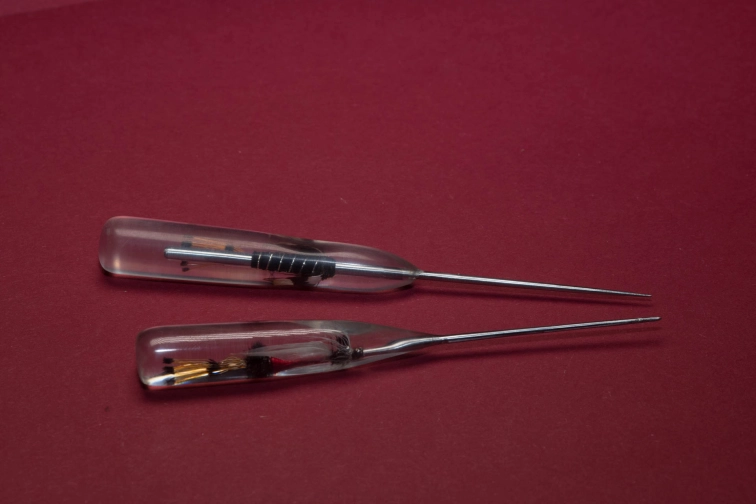
But for some reason I have received more needles from manufacturers and as gifts from other tyers than anything else. I have one with a handle made from an old split cane rod, one with a brass handle and several from various brands.
The pride of my collection is a number of custom made needles made by Dutch Bram Flierman, who sent me an overwhelming number of his beautifully handcrafted tools. This included a number of dubbing needles with metal parts made from sharpened bike spokes and handles made from everything from exotic woods to mammoth tusks. Yes, mammoth tusks! It appears to be fairly easy to get a hold of, and not that uncommon in for example knife making.
These are my favorite needles to use. All beautiful, all very nice to hold and all – of course – very capable of doing what a dubbing needle should do best: apply varnish!
More suitable tools
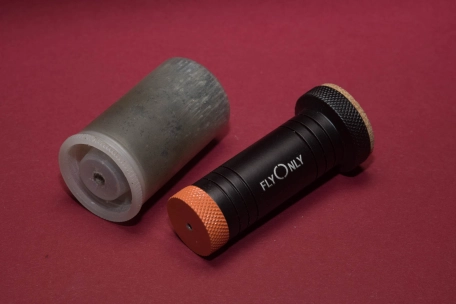
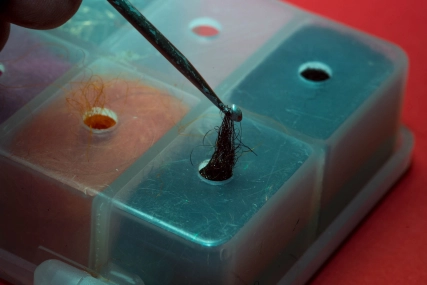
If you want a needle that’s actually useful for working with dubbing, get a small crocheting needle. This has a small hook in the end, and is very handy to pick out small amounts of dubbing from bags or the small multi-room containers with holes in them AKA dubbing dispensers (see picture).
Dig the hook into the dubbing and pull, and a small bit of dubbing will follow, often nicely pulled apart and ready to apply.
In the same way I can warmly recommend SMHAEN's thread splitter as a standin for the plain needle for splitting threads for material loops. This is an almost magical tool that will split any thread that can split, and do it almost perfectly with very little effort or precision required from you. Find more on SMHAEN's website.
- Log in to post comments