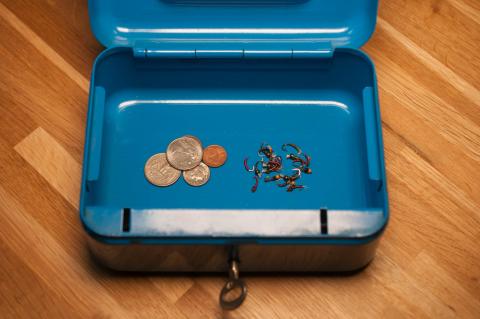
Since I moved to a house several years ago, I’ve had a combined office and tying room, which has served me very well!
I personally find these tying room tours both interesting and inspiring. It’s fun to look over the shoulders of other tyers and see what solutions they came up with, And it’s nice to kinda spy on your neighbor, isn’t it?
So in this article I'll let you spy a bit on me, and I'll go a bit more in depth with how I have set up my tying room/home office/photo studio/tinkering space.
Video tours
Barry Ord Clarke AKA The Feather Bender
Carl Pennington
Jason Klass
Davie McPhail
More tying spaces
Everyday Fly Tying Tips
The new GFF HQ
The office
Green storage
Martin Joergensen's crib
More tying cribs
I know that quite a few of these tours are made as videos, but this one is in text and pictures for now. I have thought about doing a video, but that will have to wait.
New house, more space
When my wife and I moved out of a rented apartment in central Copenhagen and bought a house in a suburb some years ago, I immediately fell in love with the largest of the three bedrooms that it had. It seemed like the perfect place to create my combined home office and tying room, and since there was also a nice bedroom and a small guest room to satisfy the need for beds, we agreed on letting me have the spacey room.
I’m so glad we did!
Good size
The previous owners had used the room for a combined office and kid’s bedroom, so the size was good, and I was sure I could put the space to good use with all my stuff and activities.
I have shown the room before in posts on this site, but this time I’m going to focus on how I organize my various activities: fly tying, photography and daily computer work.
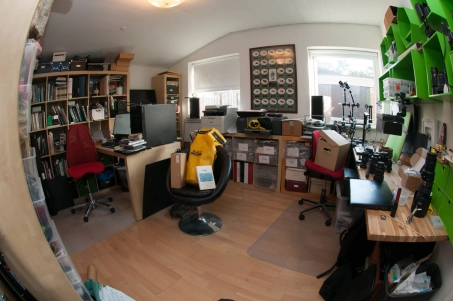
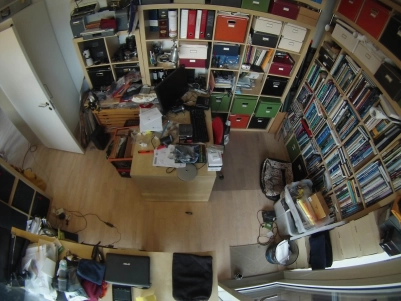
To set the choice of the largest room for my tying in perspective, I just want to mention that it’s not just a hobby room, but also my day-to-day workplace. I work from home as a self employed web developer, and spend a major part of the weekdays in this room – not tying flies or taking pictures, but working for money – so I feel that it wasn’t totally unfair that I got the biggest room.
And the size has certainly come in handy with regards to my tying and photography too, not to mention my fishing books. Just the thought of having to find space in other parts of the house for all my junk makes the blood rush behind my eyes, and having a separate room for my mess makes it so much easier to keep the rest of this place fairly tidy.
Martin Joergensen
A long table
The room was equipped with a long table along one wall when we moved in, and I decided to keep this as my work table. It is mounted on the wall (not on legs), which is a great advantage for a couple of reasons:
- it leaves plenty space underneath for storage.
- it makes it easier for me – being a wheelchair user – to get under the table. Table legs are a curse to wheelchair users.
So that was left in place.
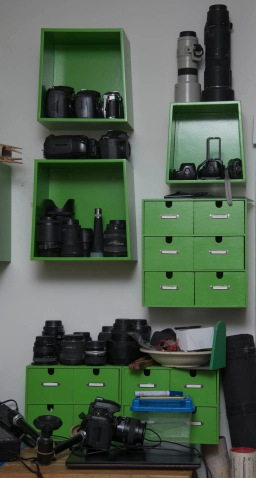
Above it I mounted a bunch of small shelves and boxes for various kinds of storage. I also bought some small commodes and painted them to match the shelves. You can see a little more about that project here: Green storage
Shelves
We had a ton of shelves from the old apartment, all in the same modular series, and I could use them for more storage. I needed space for two important things: books and fly tying material.
I have plenty of both, and oddly enough it seems that I have more now than when we moved in!
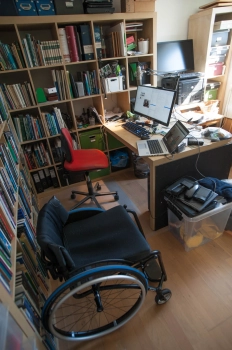
The books found their place behind my computer desk – which is also a part of the modular shelf system. These bookshelves are overflowing, and in dire need of a reorganization in order to fit in all the books currently lying horizontally on top of others. The books were originally neatly organized by author, but with very little space left over for new books, a lot of the latecomers have had to find a location outside this system.
Getting that in order requires me to take out all books, sort them by author and placing them back – with ample space for new books. But for now there’s almost overview, and I can mostly find what I need, and I have already postponed this project a few times and tend to do that whenever I get the idea that it’s time to do it.
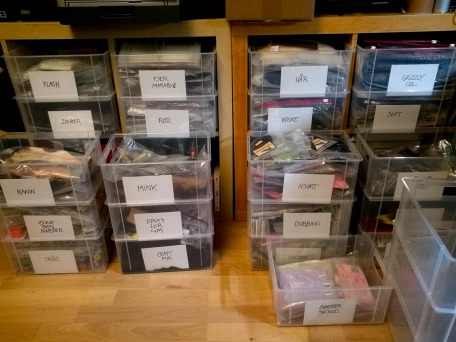
Boxes
My fly tying materials were organized in a few different ways when I was living in the old apartment.
I had at one point acquired a document cabinet – the kind they used for paper forms and such in offices and banks in the old days. It was wide and deep and had about eight shallow drawers and seemed perfect for storing stuff like skins and other flat and small items. As a supplement I had a bunch of various cardboard archival boxes with lids, which could hold boxes and bags.
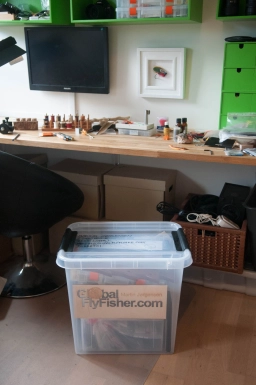
In the new room I decided to get a bunch of consistently sized semi-transparent plastic boxes. We call them brick-boxes here – maybe because they are often used to store LEGO-bricks, but it could also be because they can be stacked like bricks. In essence they are a handy size and I can fit four into one hole in the shelf system, making it very easy to pack them tightly and still have some idea of what’s inside them.
I sorted my stuff in a somewhat sensible system. Some boxes were only half filled while other categories took up several boxes. I made pieces of cardboard with a description of the content and placed them on the inside of each box, where they’d stay in place, but still be visible from the outside.
Some of the boxes contain things like tools and ZipLoc-bags, some contain glues and light curing stuff, but most contain tying materials.
I have no idea how many boxes I have, but a quick count ends up somewhere in the 40-range. Yup, I know ... I have more material than I need ... nah, just kidding! I have just what’s needed to tie a decent fly.
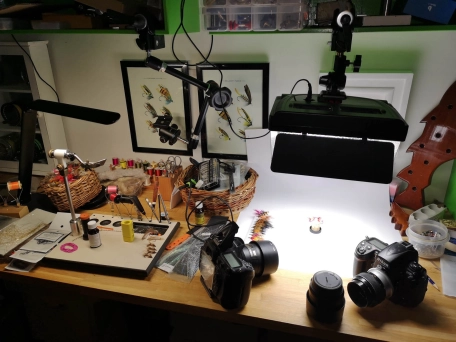
Table organization
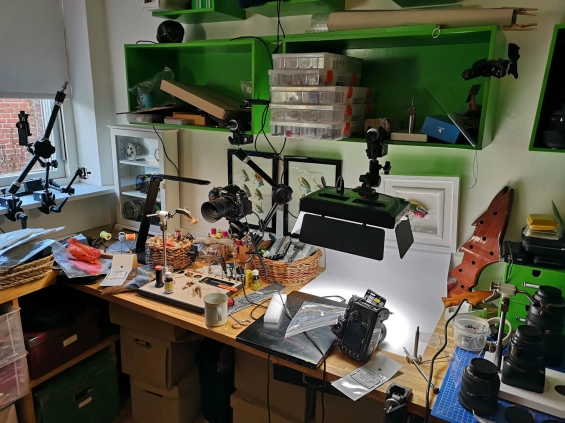
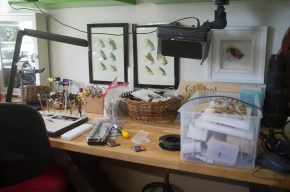
The long table is in principle divided in two parts: fly tying to the left and photography to the right.
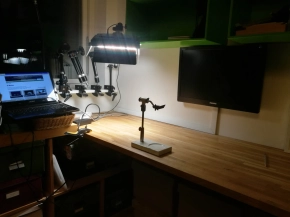
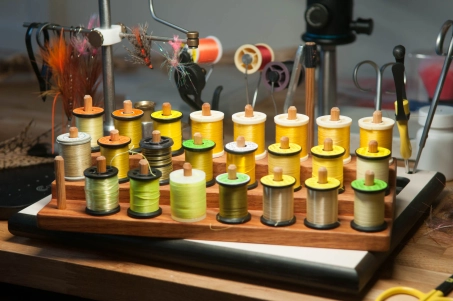
The vise is set up permanently. It’s mounted on a very nice base that I bought years ago from Mike Johnson in the UK. I bought a clamp from him too, but use the base 95% of the time. Around the vise there’s a lamp, thread spools, tools and assorted paraphernalia, which I use while tying. I have a couple of neat tool and spool holders from Gerry Engel's Bench Buddys. And of course bags of materials and hooks currently in use as well as a small wastebasket.
This section is in other words always armed and ready for me to sit down and tie, which is so great. Nothing is more demotivating than to have to clear space for the tying stuff – not to mention cleaning up afterwards.
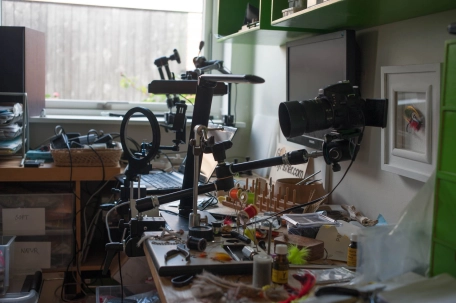
The right side of the table is the flexible end, which is used for various purposes. Towards the center right there’s a semi-permanent photo station, where I can very quickly roll out some background paper and shoot a fly, a tool or some other smaller item. There’s a powerful LED-panel set up right above it. At other times I set up a flash or two for more flexible lighting setups.
All the way to the right there’s a cutting mat and that’s where I often do small wood, paper and cardboard projects. Again it’s really nice to have this laid out and ready to use. It makes it so much easier to quickly start and finish a small project.
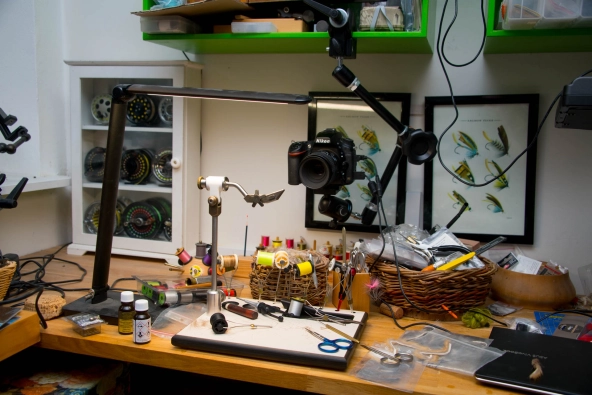
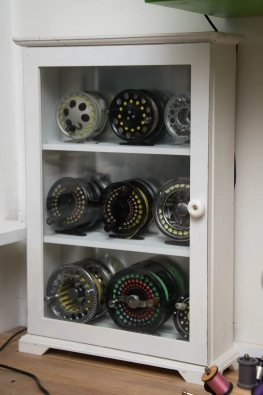
Photo stuff
Cameras, lenses, flashes and all kinds of photo stuff also has its home in the office, and I have some shelves above the table with lenses and camera bodies, and some small chests with drawers with more lenses, flashes and other photo accessories. There’s also quite a few boxes with more photo gear on the shelves, and I have thousands and thousands of slides, negatives and prints in boxes under the table.
Much of the photo gear will have a more or less permanent place in my photo backpack, which is essentially always ready to be loaded into the car or on the bike when we’re going somewhere.
The computers
Since I work with computers every day, the room is also the home for several of them.
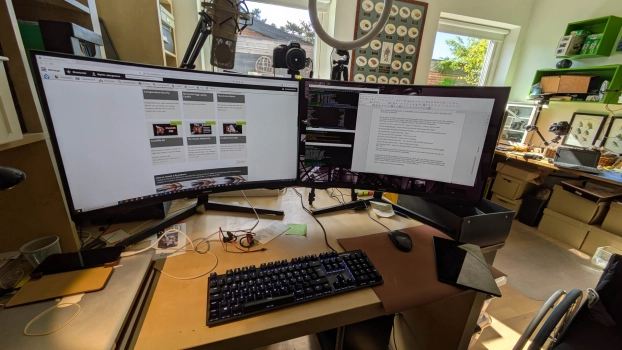
I have my everyday workstation with two large monitors. That is where I program for a living, write, do editing, do GFF stuff and much more.
It’s attached to a couple of storage units (NAS’es), which hold about 15 Terabytes of data. I also have a Linux box (currently out of commission) and a few laptops that I use when on the road.
There’s a couple of printers and a scanner, and a ton of other computer-related gear in various boxes in the shelves.

The tidy-messy-tidy cycle
Like most other rooms, this one goes through a cycle, which typically has a rhythm of about 2-3 months. If we start out when it’s newly cleaned and tidy, everything is in its proper place, and only a few items currently in use are on the tables, so there are lots of open horizontal spaces on tables and shelves.
Of course this isn’t a lasting condition. As I use the room and haul out things to work with, more and more of the previously free surfaces get covered. My material bags and tools are on the table next to the vise. A camera is left on an arm over the photo area, and some piece of wood or cardboard is left together with knifes, rulers, scissors, glue and whatnot on the cutting mat.
Books that I’m reading or reviewing are found next to the computer and various bits and pieces are scattered everywhere: papers, pens, batteries, cables and such. They do have a place, but I’ll put them back tomorrow ... like, sure I will!
I also tend to add new stuff, like a remote controlled airplane, some soldering gear and electronics, paper, crayons and markers, a drone. You know, all these things that many of us tend to acquire over the years. All fun to play with, but all requiring storage space, which isn’t there because everything is a mess.
Hoarding, tidying and trashing
So one day – and it’s coming up soon, I can feel – I bring out the vacuum cleaner, a broom and some damp cloths and start organizing. Things find their place, dust gets removed and more and more table space becomes available.
There is actually plenty of storage room for everything, it just has to find its way into boxes, drawers and shelves.
And quite a bit goes in the trash - or at least out of this house. I’m not a hoarder and I don’t have a tendency to keep everything that it’s unlikely that I will ever use. But I still hate throwing out things that can be used.
In the last many years I have taken to giving quite a bit away. Fly tying and fishing gear that I don’t need can help others – maybe beginners who are building up their own assortment of gear.
I also give things to recycle and thrift stores. We have many of those here, and they often serve a good purpose, supporting various charities with the money they make on recycling or up-cycling stuff. If money can be made from my trash, it’s just great.
I get rid of it, someone else can use it, and it doesn’t take up space in my house.
Which brings me a bit off track, but bear with me.
Dödsstädning
OK, sorry for that odd word, but our Swedish friends have invented that great term – dödsstädning – literally meaning death cleaning or death tidying.
This is the concept that you yourself start tidying up before you pass away, saving your children, friends or other people from doing it.
I think it’s a great concept!
Having cleaned up after several older family members who passed, has taught me that there’s an overwhelming amount of things to do when it happens. And all those things have to be done on top of the fact that you just lost a beloved family member.
I think it’s a great concept!
One thing is going through the sometimes totally crazy amount of items people have saved and stored, but as those of you who have experienced this know, there’s also a lot of formal things that have to be taken care of like property handling, economy and such.
So saving those left behind from having to go through all my stuff has become a task that I’m slowly starting up. I don’t plan on leaving right away, but that’s the whole idea: start as early as possible and get things in order before you loose the energy and capacity to do it.
Apart from that, I will make sure that I make it clear what’s going to happen with all this fly-fishing and fly-tying stuff of mine. I’d hate to see it end up in the hands of someone who doesn’t appreciate its value, not that it’s all valuable in money, but because it could be very valuable to the right people. And ... there are also a few items in the lot, which actually are worth quite a bit of money, like my LAW vise and a few of my fly reels — not least a couple of Waldron reels.
So part of my tidy-messy-tidy-cycle is to be generous and liberal with what I get rid of. If I don't use it and it doesn't represent any emotional value, it goes on in the system: to be sold, given away, recycled or simply trashed, depending on usability and/or value.
- Log in to post comments