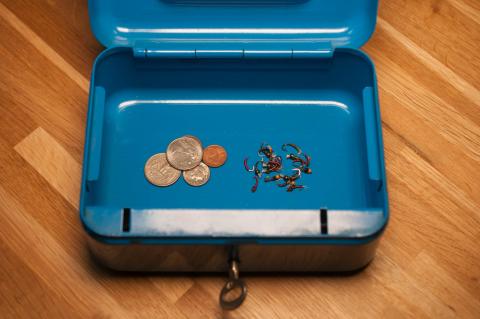
Let’s look at a side by side comparison of natural and synthetic materials used to tie the same pattern

I tie a lot of flies with synthetic materials, some of them are totally synthetic. Developing a sensitivity to certain natural materials is part of this. Using deer hair is out of the question, the last time I tried I couldn’t finish the fly. It’s very difficult to finish trimming a deer hair sedge with watering eyes while sneezing continuously. I chucked the fly in the bin and went for a shower. While other furs and feathers provoke a similar reaction there are a select few that I can use in moderation provided I vacuum up the dust afterwards. Partridge and pheasant tail feathers are usable in moderation provided they are clean, some dubbing materials are OK, others not so much.
Flies last longer
The other reason I use synthetics, organza ribbon in particular, is that the flies last longer. Provided I don’t lose them to a rock or a tree, their life is typically defined by whether I can resharpen the hook point or not. Tail and leg fibres are folded around the tying thread before tying in so they cannot pull out. Neither will they break. Bodies don’t need a wire rib for strength, trout won’t chew through them.

Microplastics
Now and again, I’ll see someone write that they will not use synthetic materials in their flies for environmental reasons as they don’t want to add microplastics to the waters that they fish. Of course, everyone is free to do their bit for the environment in any way they choose. On a wild stream or river far from the hand of man avoiding flies that contain synthetics may be appropriate. However, if you lose a fly on such a water and the nylon or fluorocarbon tippet breaks anywhere above the hook knot the action is somewhat moot.
Facts

Let’s look at the facts [1]. Microplastics in the environment are classified into primary and secondary classes. Primary microplastics are released directly into the environment from human activities, of these the major sources are from washing synthetic fabrics (35%) and from car tyre dust (28%). These combined with other primary particles add up to the equivalent of 40 plastic bags/person/year and make up 30% of microplastics in the sea. Secondary microplastics are derived from physical and chemical breakdown of larger plastic objects like bottles, plastic bags, ropes, fishing nets etc. and account for 70% of oceanic microplastics. The bottom line is that driving a car and washing fleece garments, both normal activities of fly anglers, are going to contribute far more microplastics to the environment than losing the odd fly now and then.
Aestethics
Some fly tyers distain synthetics for aesthetic reasons. Some prefer the inherent variation in natural materials, others maintain that they look better in the water. Beauty is in the eye of the beholder, and the fish. The latter is the true test, and trout don’t have nearly as good eyesight as we do, nor do they have the luxury of taking time to examine a fly in detail close up in a fly clip or in a photograph. If it looks like food fish will eat it, just as millions of people eat fast food that bears only a passing resemblance to the enticing advertising posters on the walls around them.

Two identical nymphs
Let’s look at a side by side comparison of a natural and a synthetic material used to tie the same pattern. One, pheasant tail, is composed of the natural polymer keratin, the second, organza ribbon is made from the synthetic polymer nylon. Both are available in a range of colours or can be dyed or coloured with marker pens and both can be used in a number of ways in tying a fly to form tails, legs, and bodies. They also both look different when they are wet, which or course is an important factor as the trout won’t be examining them when they are nice and dry in your fly box.


When wet
Most flies, just like these natural and synthetic versions of the same pattern, look different when they are wet. The reason being that water has a different refractive index from air and consequently light interacts differently with the materials in the pattern. The most obvious difference is materials tend to get darker and more translucent or transparent (which is why wet T-shirt completions were once a thing). The second is that materials with fine fibres trap air bubbles in the same way that small body parts on natural nymphs do and these bubbles act as tiny reflectors catching the light. Many popular patterns call for a plastic tinsel rib over natural dubbing to give this appearance when the fly is tied, when in fact the dubbing alone would achieve it quite adequately once dropped into water.

Many synthetics available
Today there are many synthetics available as standard tying materials. Flex floss, fritz, chenille, ribbons, faux-fur, and many more that are sold under the different supplier’s names, the list is long. While some of them may have been actually made for fly tying, the vast majority are repurposed materials which are manufactured and used in much greater quantities for weaving or knitting garments, car seat covers, carpets, decorative trims, and other consumer items. Many of these will be washed and consequently shed far more microplastics into the environment than the odd lost fly will do.
Are synthetic materials a friend or a foe? In the end the decision is yours as a fly-tyer, but if you are concerned over the possible environmental impact of what you choose to wrap around a hook, I hope this may help you to make an informed decision.
- Log in to post comments