The Zelda combines a distinctive Icelandic salmon fly tradition with elements from modern trout nymphing
With his fly Zelda, creator Icelandic Kjartan Antonsson has combined a distinctive Icelandic salmon fly tradition with elements from modern trout nymphing—and done so with great success.
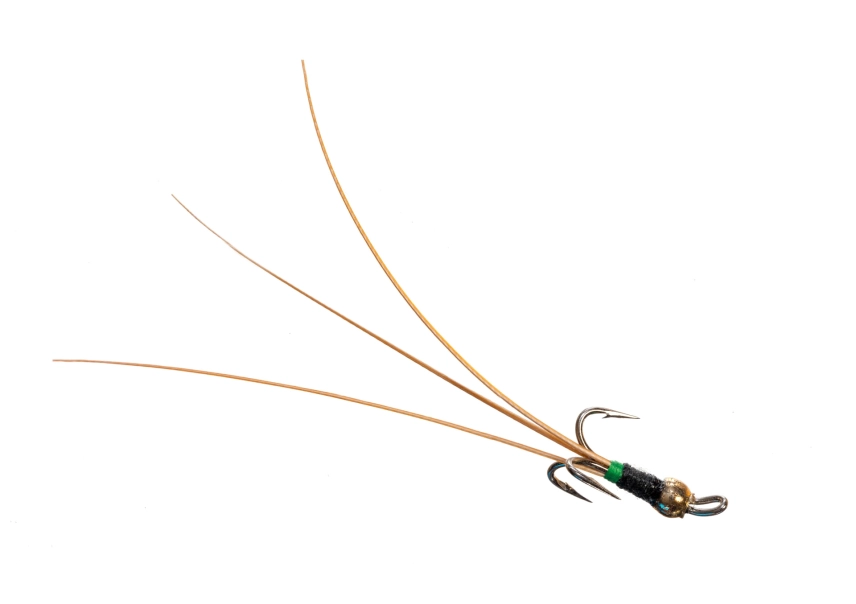
Over the past fifty years, Icelandic salmon flies have introduced several exciting innovations, including very small flies often tied on golden treble hooks. Others have introduced highly unusual long tails such as stripped feather barbs fanned out, elk hair, or guard hairs from wild boar and peccary—all with the purpose of enticing the fish and stabilizing the fly.
With the Zelda, this tradition was distilled, simplified, and given an entirely new element in salmon flies: a bead head.
Kjartan Antonsson AKA “KJ” to foreign connections who struggle to pronounce his name, is an avid hunter and fly fisher, as well as a highly experienced guide.
He tied the first Zelda in 1999. The concept was named after his Shorthaired Vorsteh Dog, Zelda, which in turn was named after his sons’ video game.
But he got the idea for the fly two years earlier while actually trout fishing upstream, using two bead head nymphs as dropper flies under a floating dry fly. Every now and then, salmon would also take these nymphs.
“That was interesting,” Kjartan thought.
Zelda is based on trout bead head nymphs, but was the first fly to combine bead head nymphs with the already established Icelandic practice of long stabilizing, turbulence-creating tails tied on small, often golden treble hooks.
While beaded nymphs are mostly intended for upstream dead-drift presentations, Zelda is meant for a downstream swing, though it can also be fished on an upstream dead drift.
Nils Folmer Jørgensen
The first time Kjartan fished this new pattern, he had ten strikes and landed six salmon—all on a Zelda with a green butt and a black body. He kept the pattern secret for a long time, and mostly reserved it for clients he guided. He only brought it out when conditions were particularly difficult. According to him, that’s when Zelda truly shows what it can do.
The “secret” held for 18 years.
Then Peter Rippin, who had sold fishing trips to Iceland for many years, was asked by UK fly manufacturer Fulling Mill, if he had heard of this "Sputnik fly".
Rippin replied that he fished it often and that it was called Zelda.
Since then, Zelda has been licensed to Fulling Mill. “That’s when it exploded,” Kjartan says.
The “secret” held for 18 years.
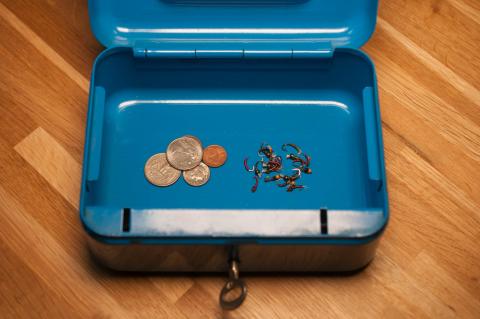
The flies shown here are tied by Kjartan himself, who also ties them for sale.
Modern variant
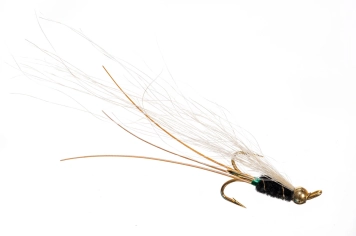
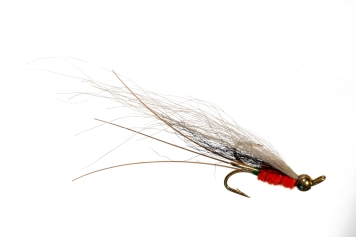
This variant is tied in all relevant sizes. A #6 is considered large for a Zelda and is intended for low water temperatures, such as those in Icelandic glacial rivers. Designed this way, the fly’s center of balance makes it ride with the polar bear wing facing upward, which is perfect for maximum visibility of the fly itself and allows the fish to see the fly’s reflection against the underside of the surface film from a distance outside the Snell’s window.
Basic version
This is the variant Kjartan started with and the one he can fish throughout the entire summer season. It’s easy to see why it was nicknamed “Sputnik” after the Russian satellite. One challenge in tying these flies is that beads in the required sizes do not have holes large enough to pass over the eye of these hooks. For me, the solution has been to clamp the beads in a vise and drill larger holes.
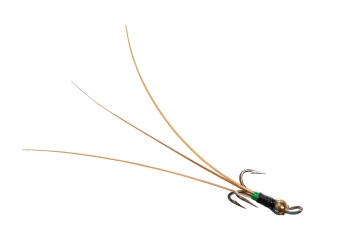
Red and green
This is one of the basic versions, featuring a distinct red element.
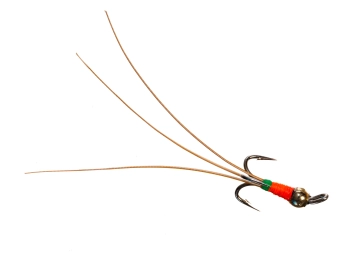
Variant with red
A slightly beefier version with a wing.
- Log in to post comments