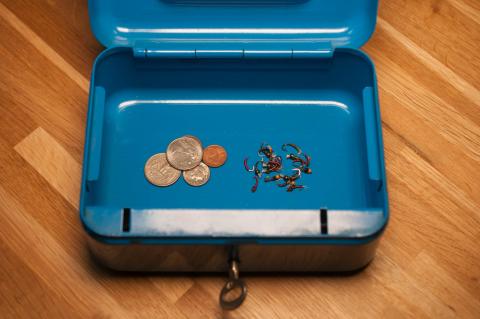
Some flies are so simple and use so few materials that it's almost embarrassing. They may even be ugly too ... but most of them are deadly efficient!
I like simple. I have confessed that before, and will gladly do it again. Simple does not have to mean primitive. It just means optimized for simplicity, and in fly tying that means few and easily accessible materials, simple construction and easy to tie, using no complex tying methods. Like most of the flies in the excellent book Simple Flies by Lyle Morgan.
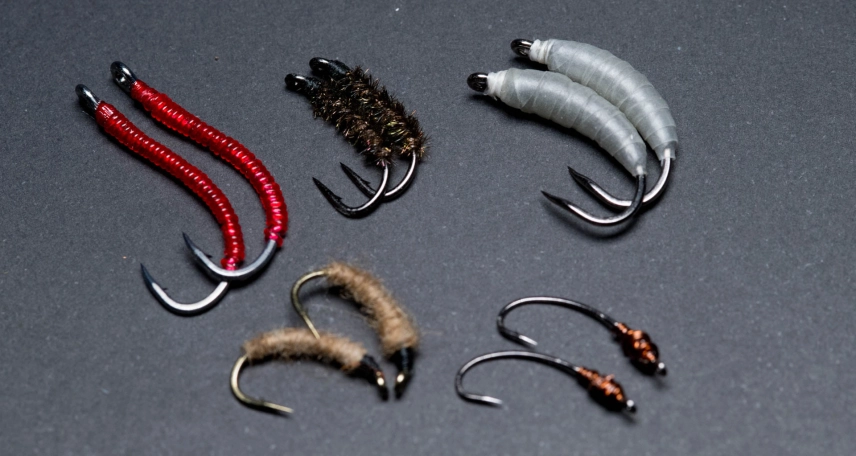
But even with my attraction to simple, I sometimes bump into flies, which are not only simple, but oftentimes also primitive – and in some cases even ugly.
That’s not always to my liking.
But I have to admit that many of these patterns have something going for them. They are generally easy to tie, and mostly deadly efficient on the water, which has to be the most important trait of any fly – however simple it may be.
Even I respect that.
Still there are some of the flies that I list below, which I rarely or never tie, and basically never fish. They may work, but – not to sound arrogant – it’s simply below my dignity to fish them!
... unless I’m catching nothing on my fancy flies, and the simple ones work … then I can lower my standards and tie on a primitive fly … as long as no one is watching, of course!
Red hook chironomid
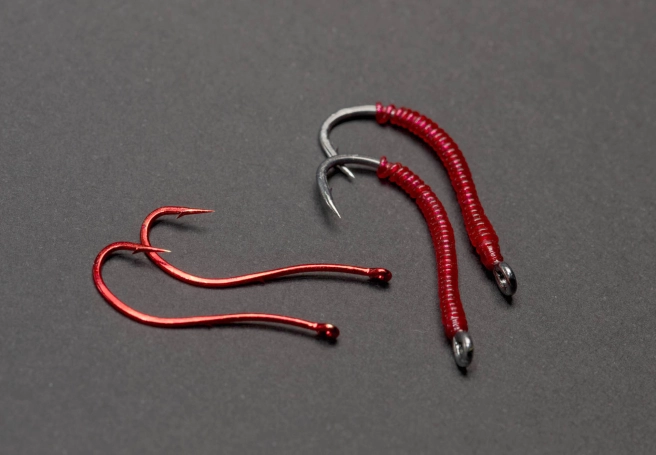
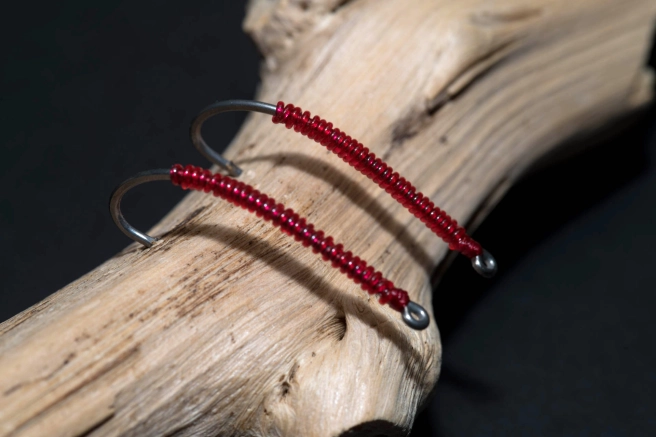
I think the simplest fly I have ever seen is the red hook. Simply a steel hook plated red by the manufacturer. Blood worm fly fishing in three easy steps:
- Take a hook from the pack.
- Tie it on the tippet.
- Fish.
That’s it.
It’s very close to a dead on imitation of a red chironomid larva, also known as a blood worm. These animals are the larval stage of certain species of midges – essentially non-biting mosquitoes. The hook doesn’t wiggle like the natural, but apart from that it’s pretty spot on.
The fly can be fished with great luck in lakes and stillwaters where the chironomids are very common, and a stable food for the fish.
You can consider adding other materials, tying a head, gills and all sorts of niceties, but honestly: save yourself the work. Fish it in a team with a nymph as a dropper to weigh it down, and a bushy fly at the top fly, and you have a great, red morsel for a fish to take.
The chironomid
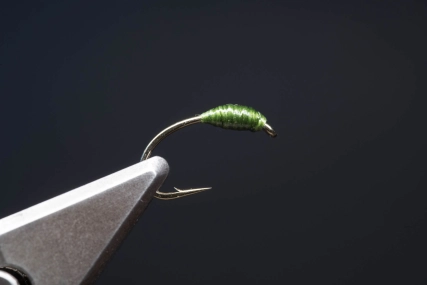
If you insist on at least tying some material on the hook, you can take the red hook up one notch by covering a plain hook with red thread, wire or some kind of string. Jewelry cord made of soft transparent plastic is a very good contender, and you can get it in all kinds of colors, making it easy to imitate almost any kind of worm.
Simply tie it in at the front of the hook, tie it down along the shank to the hook bend, take the thread forwards, follow with the cord in touching turns. Tie it down, form a small head and whip finish and you are there. It's a good looking fly and even quite durable. You can - as always - add a bead for weight and also play with peacock herl or some dubbing for a thorax, and maybe add some white gills, but then again ... it might not be necessary.
Bare Hook Nymph
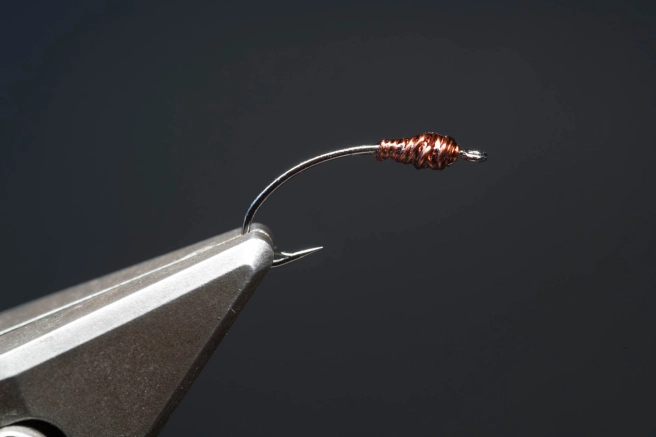
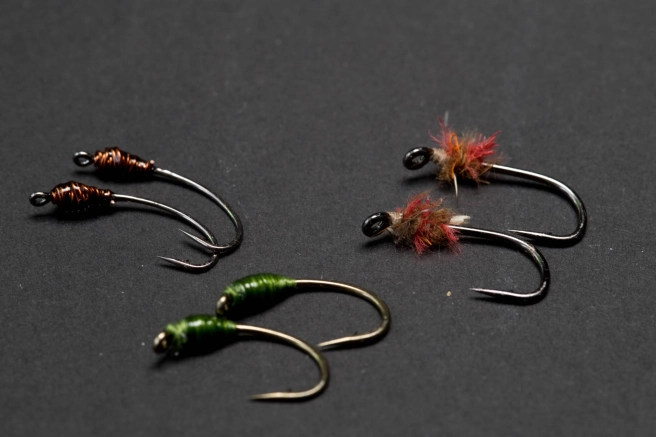
Oliver Kite was a UK fly angler and TV personality whose main legacy probably is popularizing Frank Sawyer's flies and way of fishing nymphs (more on Sawyer below). One of his principles was tying simple flies, and of all the simple patterns he originated, the Bare Hook Nymph is probably the simplest. It is - as the name implies - mainly a bare hook, and you can with a certain degree of justification say that it's a Sawyer Pheasant Tail Nymph without the pheasant tail ... in other words just copper wire on a hook.
By wrapping a clump of copper wire in the front of a bare hook, you get a couple of things: the basic shape of a nymph with a slender body and a fat thorax, and a very dense and fast sinking fly.
You need a hook and some wire and you're on. Simply wrap the wire criss-cross in the front third of a hook, and the fly is done. A bit of varnish or super glue may secure it a lifespan that's a bit more than one trip - or even just a few casts - but it will work without.
You can vary the concept and use different materials as well as tying thread and dubbing to create the lumpy front. The hook style, color and wire thickness can be varied to alter shape and density of the final fly. That will also give you flies with varying sink rates.
No matter what you do, the fly is dead easy and fast to tie, and definitely a very efficient fishing fly.
San Juan Worm/Squirmy Wormy
This kind of fly is almost an insult! But it’s a very efficient insult, and not wanting to fish the San Juan Worm or the Squirmy Wormy because they’re primitive, ugly and “not a real fly” will have you miss out on a lot of action.

The San Juan Worm is made with yarn or chenille, and is essentially a piece of string on a hook. The advanced versions have a bead midships, but that probably just makes it even more sacrilegious to some, but certainly doesn’t make it less efficient, because it’s often fished in places where getting down is a key to success.
And if you want to add insult to injury, just replace the chenille with some modern, rubbery material in a bright and unnatural color!
Enter the Squirmy Wormy.
The rubber/silicone squirmy material is widely available and comes in many colors, and when you see the way it moves in the water, you can’t be surprised that fish love it. Tie in a bit mid-shank on a hook, or simply thread a hook and some squirmy material through a heavy bead, and you have an offensively ugly – and deadly – fly!
You can see more in the article Squirmy nymphs for black bass, and the video section has lots of Squirmy Wormy videos.
Mop fly
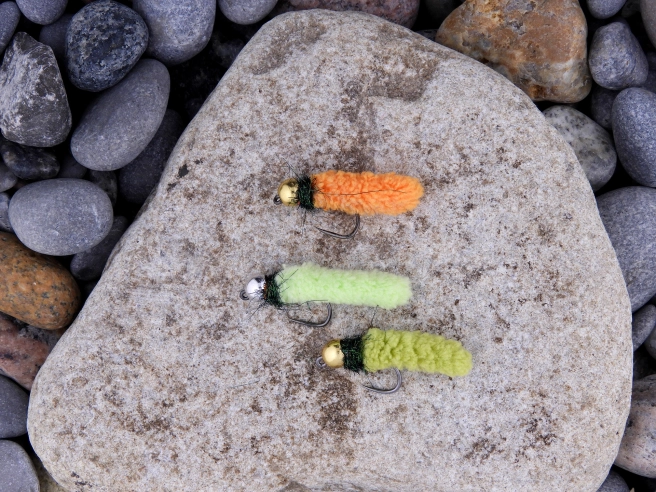
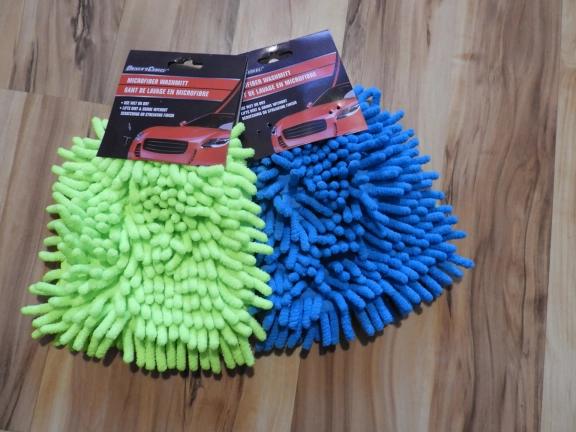
The Mop Fly goes along the same lines as the one above. Another material, which was recently “discovered”, not made for fly tying, but very useful. As the name implies, it comes from floor mops. Yup, the kind you use to wash floors with!
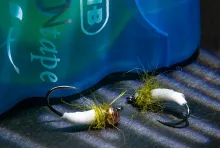
These come in a type made from thick, sausage shaped microfiber “hairs”, technically a chenille. Cutting off such a noodle and tying it onto a hook will give you a pretty good imitation of a grub or a scud.
Use a tan, white or olive mob “hair”, and add something dark in the front – dark dubbing or peacock herl – and you have a very good caddis larva.
Add a bead and the whole thing sinks readily down to the fish, which will willingly take this sad excuse for a fly!
You will find the mop material in bathroom rugs, door mats and of course the above mentioned mops, and you can typically get a life’s worth of supplies for a few dollars in basically any supermarket.


Rubber Worm/Wax Worm
This one is a bit more challenging … it actually requires wrapping the material!
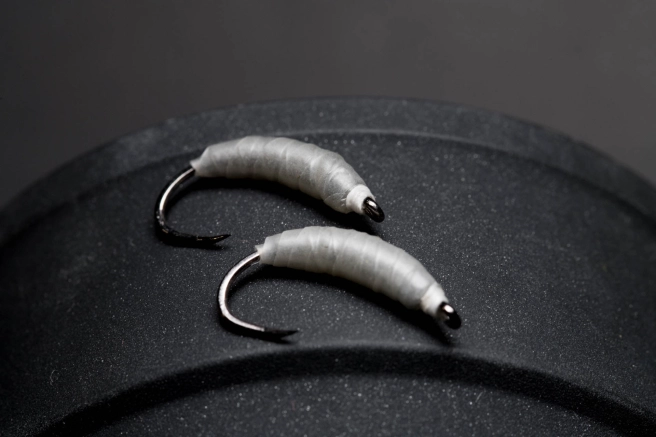
There’s only one material and the tie is really easy. But you must break out thread, scissors and all kinds of competences to tie it. Still, it’s very simple and easy to tie, and looks quite a bit like something living and edible such as a grub, maggot or a worm.
Grubs are the larva of beetles and insects such as house flies, and can be high on the menu of fish. They are usually found in soil and carcasses, but are sometimes flushed into the water where they become a very easy-to-catch and nutritious meal.
Rubber strips, like cut-up rubber gloves, is a popular material for these flies. Again you can add a head to get a caddis and a bead to get the fly to sink faster, and you can use various shapes and colors of rubber. On the flies shown here, the latex is wrapped over a layer of heavy foil that shapes the body. Basically any silicone, latex or rubber strip you can lay your hands on will work as long as it’s sufficiently narrow and a bit stretchy. Common rubber bands are not good, though, because they dry out a rot. On the other hand, it’s no big deal to strip off the dried dubber and tie new materials onto the hook, so as I said: almost anything goes.
See also Nick Thomas' Chain Worm.
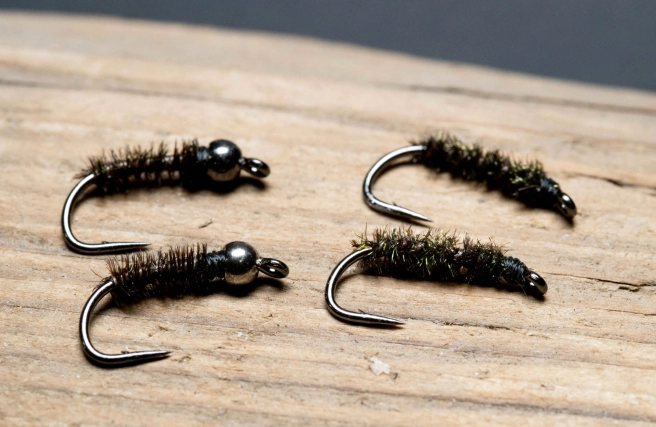
Peacock Herl Nymph
If you do the same trick with a bunch of peacock herl, you get a Herl Nymph. How about that? Peacock herl is an almost magic material, with a shimmer and shine that is only matched by few other materials in its price class. Most fly material boxes contain a bagful or two, and wrapping a few on a hook, will produce you a very efficient and generic fly. Create a rope using the tying thread, and it’s even slightly durable, or add a rib and it becomes even more robust.
Again a bead can be your friend if you want to go deep in faster water.
Varying shape and size can be done by selecting various hooks or even adding some copper or other heavy wire under the herl, but again as it’s the case with many of these simple flies, it might not be worth the effort, because they are efficient as they are: simple.
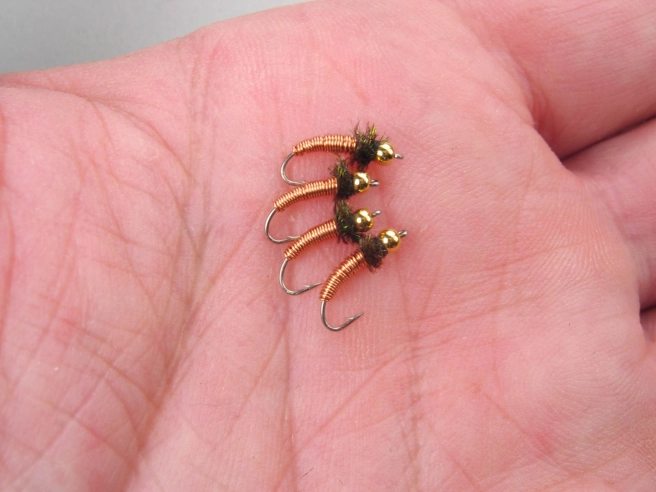
Brassie
The Brassie has one very important virtue: weight! The original is copper wire and peacock her, but an even heavier version has a brass bead and copper wire as the main materials, so it's weight with some weight added, and even though they both shine – at least before they tarnish – I do believe that it’s mainly because the fly quickly penetrates the surface and sinks in the water column that it’s so efficient.
Peacock herl adds some magic to any fly, and its iridescence definitely adds to this fly’s efficiency too, even though many metal-only Brassies have caught lots of fish.
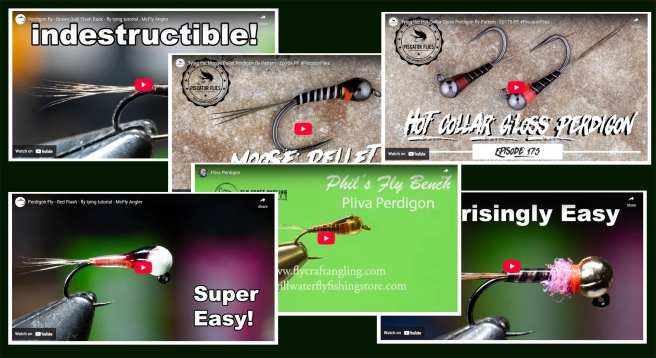
Perdigon nymphs
This style of fly hails from Spain where it was originally tied for competition fishing, and probably originated by José María Cros from Catalonia in northern Spain and popularized by José Carlos Rodríguez, a Spanish competition angler.
Now, if you’ve seen competitive fishing, you’ll have noticed a number of things: they fish nymphs almost 100% of the time, they typically use a technique often referred to as Euro-nymphing or sometimes "High Sticking" consisting of very short “casts” with almost no line out of the tip top, basically lifting the fly upstream and dropping it almost under the rod tip. They do very short drifts with very close contact to the fly, following the fly downstream with the rod tip. And they catch a heck of a lot of fish!
All this is enabled by using flies that sink quickly to the desired depth, often very close to the bottom, and patterns like Perdigon Nymphs are perfect for that. They are dense and smooth, and even without being extremely heavy, they penetrate the water column easily.
Perdigon means pellet in Spanish, but not in the sense food pellet, but a shotgun pellet – a lead shot. The flies are often referred to as Perdigones – simply pellets.
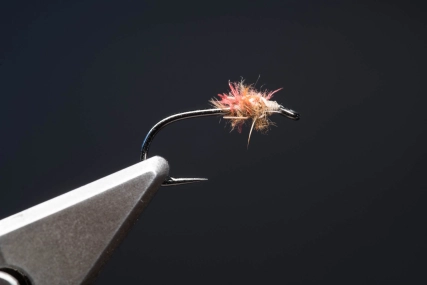
The Perdigones are the condensed version of a lead shot pinched onto the tippet right in front of a small, dense nymph. They are simply combined into one: nymph and bead grown together like Siamese twins. Oftentimes the flies are tied on jig hooks, and will ride point up, saving the angler from a lot of snags.
It might seem primitive, and the simplest Perdigon Nymphs aren’t complex, consisting of a hook, a bead, some tying thread and nail polish or LCR. But many are actually quite complex and even beautiful, using colors and reflective materials to create something that appeals to both humans and fish in spite of its simplicity.
You will find all our content with Perdigon nymphs here.
Killer Bug
I’ll cover a couple of Frank Sawyer patterns, which may be simple, but both are real killers. This first one even has the word killer in its name. It’s as simple as it’s efficient. It’s not big science in fly design, basically just being yarn on a hook and some copper wire. Selecting the right yarn and giving the fly the right shape has resulted in a very efficient little worm/nymph/scud imitation.
It originally used the almost legendary Chadwick 477 wool yarn, which is no longer produced. You can find suitable replacements, both in fly shops and in yarn shops. And you can find the original sometimes, but the price is usually pretty crazy!
The Chadwick yarn was 85% wool and 15% nylon in a warmish tan color, and it’s not impossible to find yarn very much like it. Several suppliers have it in their lineup, like Semperfli’s Chadwicks 477 Substitute or Upavon Chadwick's 477 Substitute.
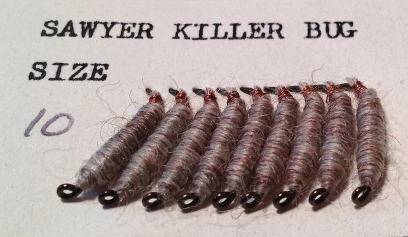
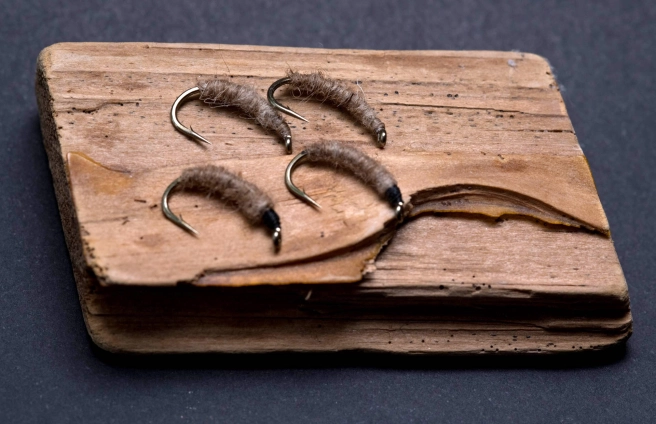
The yarn has to be fairly thin, enabling you to build the right taper on the fly, and it’s common to split the furled yarn in single threads to get the proper taper and smooth look of the original.
I have caught sea run brown trout in the ocean on Killer Bugs, and a bright orange Killer Bug (which is not really a Killer Bug) is a very efficient fly for catching garfish in the shallow coastal waters of the Baltic.
I have oftentimes tied Killer Bug like flies using dubbing in stead of yarn, and that works equally well. You can even control the shape of the fly better when dubbing, and get a better taper in stead of an even cylinder.

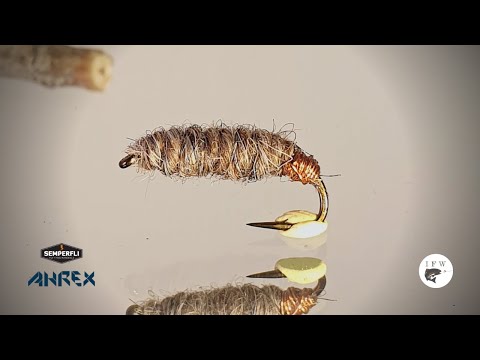
A couple of Killer Bug videos
PTN
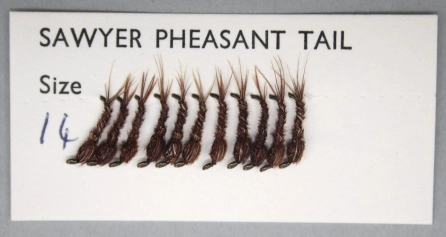
Sawyer's Pheasant Tail Nymph also known as the PTN, tied with just pheasant tail fibers and copper wire, is an almost perfect nymph imitation, utilizing the materials to the most.
The fibers add color and texture, the wire adds weight and durability.
Calling it simple isn’t actually fair, but the way it utilizes its two materials makes it a contender for this list anyway.
It’s not the easiest fly to tie, and compared to some of the others here, it’s actually bordering on difficult, but it can hardly be called complex. The trick to a good looking fly lies in obtaining the proper proportions, which isn’t always that easy. The single bunch of fibers make both the tail, the abdomen, the thorax and the wing case, and the only "tying thread" is the copper wire.
See some original flies tied by Frank Sawyer in this Davie McPhail video
Griffith’s Gnat
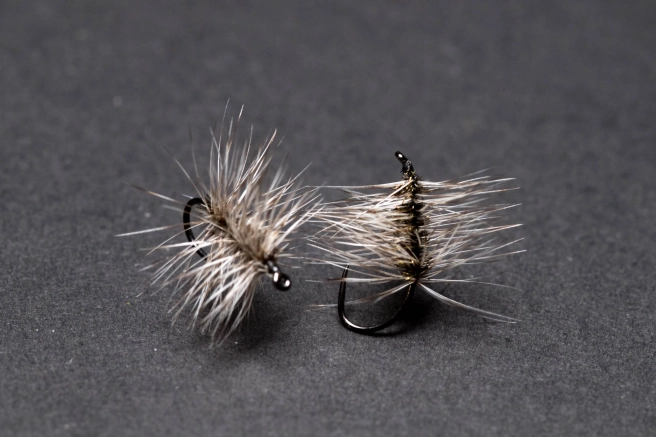
The Griffith’s Gnat is also slightly complicated compared to many other patterns shown here. It’s not one, but two materials apart from the thread! And it incorporates a hackle, which should be wrapped nicely and evenly to get the proper “gnatty” look. Also it’s mostly tied on a small hook, requiring some dexterity to tie.
The fly is typically fished dry, and combining the small size with the black and gray colors of the fly can make it pretty hard to spot on the surface, especially if the water is a bit turbulent or you have glare.
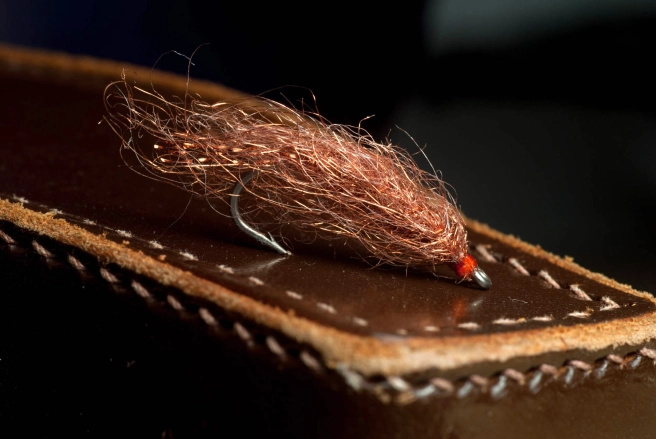
Copper Bully
The Copper Bully (Kobberbassen) is a very popular Danish fly for coastal sea trout, and it does a brilliant job of imitating small scuds of the Gammarus genus. It will be equally efficient as a freshwater fly, and you can vary the color as it’s sometimes done here, where there’s also Gold Bully. You can basically use any color dubbing for the fly and create your own Olive Bully, Black Bully or whatever color Bully you fancy.
The original pattern was crazy complex with both a tail and a rib, but most Danish tyers nowadays will simply put dubbing in a thread loop, spin it and wrap it onto the hook. Most brush it to tease out the dubbing out a bit. Some of the really ambitious ones still add a rib for durability, and I have even seen some people go totally over the top with a brass bead for weight! The latter can make sense if you want to fish this fly in a current, where it might struggle to sink.
More about the Copper Bully.
The Fluff, which we have also covered on this site, is the big brother of the Copper Bully, tied on a larger streamer hook and in various colors, it makes for a very simple, but fine suggestion of a shrimp or a small baitfish.
More about the Fluff.
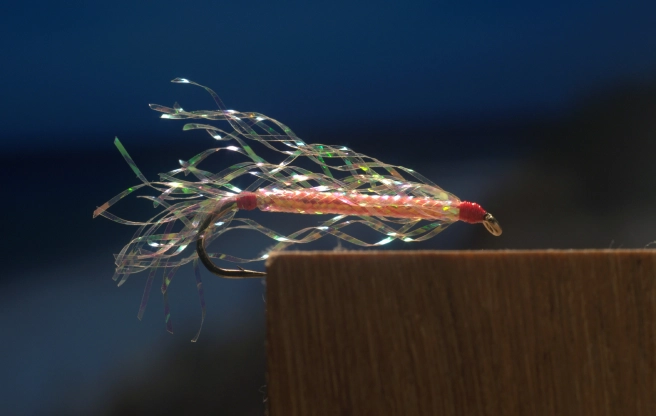
Christmas Tree
Staying in Denmark and staying on the coast we have to pass by the Christmas Tree, originated by Danish fly angler and author Steen Ulnits. This is also a simple and very efficient fly. When I was a budding fly angler and tyer, I simply rejected fishing with it! I found it primitive, ugly and an insult to the fish.
Experience has made me wiser!
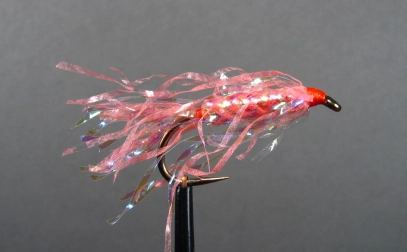
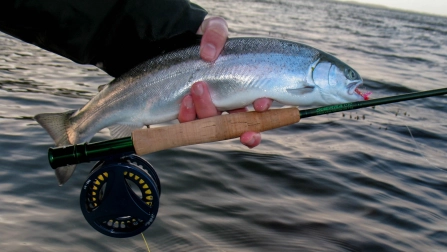
The fly is simple to tie, uses two readily available and cheap materials, and is a great fly when the water is a bit murky or turbulent. I have to admit that I have caught many sea trout on this pattern, and that a few samples in various colors are almost always present in my fly box. The pink version with eyes has gotten its own name, and is mostly referred to as The Flame - Flammen in Danish.
More about the Christmas Tree.
Sunray Shadow
A tube and a wing. That’s about the simplest tube fly you can tie, and it so happens that it’s also one of the most efficient ones. OK, the wing consists of three materials making it one of the more complex flies in this collection, but all are easy to find and easy to handle: bucktal, Arctic fox and peacock herl. It has no body and no bells or whistles. You just tie in a long wing of the three materials and it's ready to lure a salmon.
See how to tie the Sunray Shadow here. You can also tie a more advanced version with both a body and eyes: The Staring Sunray Shadow
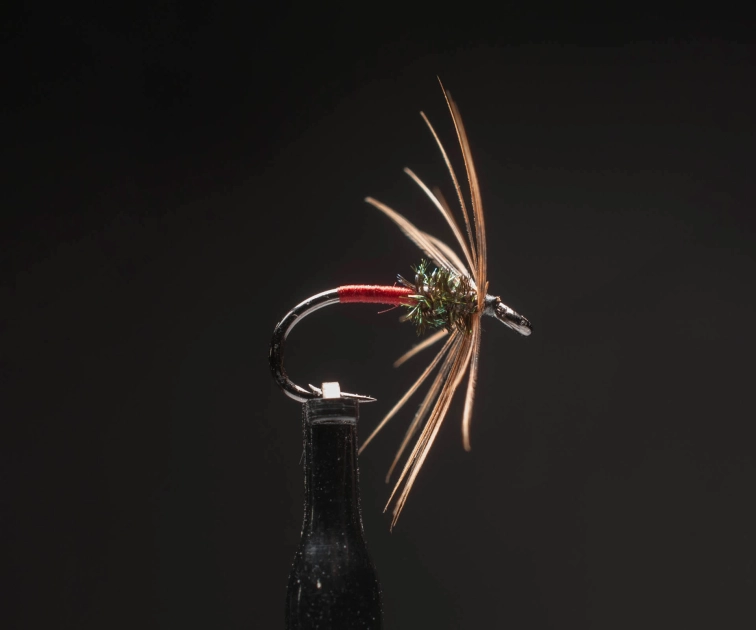
Generic spider or soft hackle
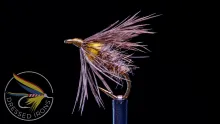
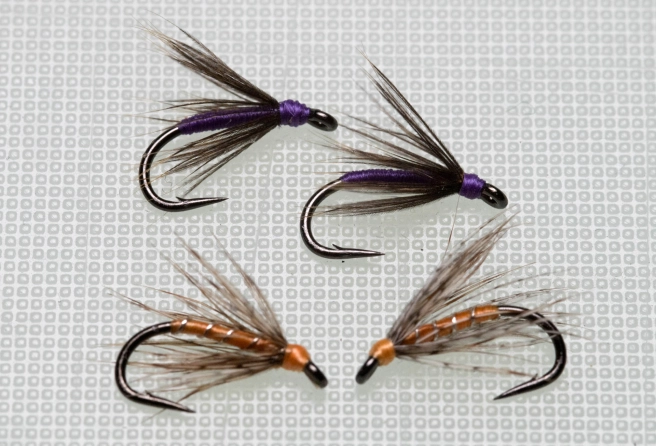
Calling a Partridge and Orange, a Waterhen Bloa or a Purple and Snipe primitive would be offensive!
Simple, sure, but primitive? Absolutely not.
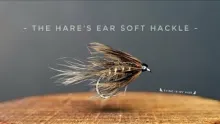
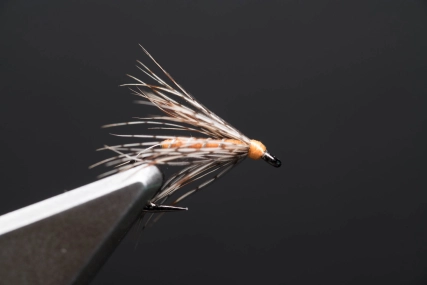
These flies and many more tied in the North Country soft hackle or spider style may very well consist of just two or three materials – body and hackle, and sometimes a rib – but they are all mature and developed patterns, which do not look as they do because of the random laziness of some fly tyer, but because they work.
And tying a proper soft hackle with a good looking body and hackle isn’t as easy as their simple appearance might suggest.
So in spite of being listed under the title of this article “Shamelessly simple”, they and their kin have absolutely nothing to be ashamed of.

Martin Joergensen
CDC&Elk
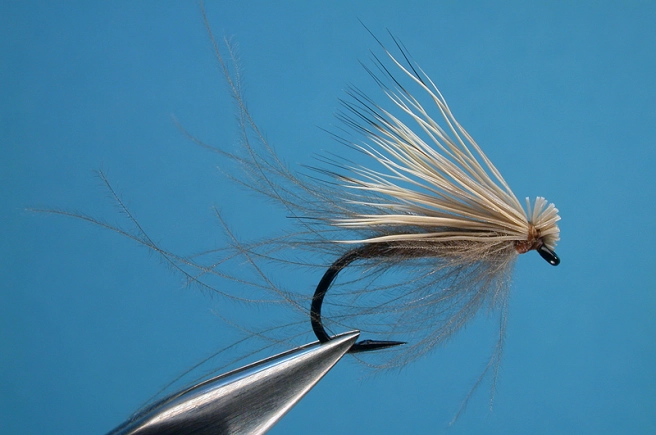
Continuing along the same line, we can cover other simple, but yet very well designed flies, such as Hans Weilenmann’s deadly CDC&Elk.
Again just two materials: a CDC feather and a small bunch of deer hair, but again combined in such a way that the result is a fly universally recognized as one of the all time classic dry flies.
It's a highly efficient caddis imitation and has consistently lured fish even when no caddis are around. It's a great floater, utilizing two floating materials: CDC and deer hair, and it's shape and mobility seems to be more than the average trout or grayling can resist.
Hans' story about the CDC&Elk.
Flies from the CDC & Elk family.

See Hans himself tie the CDC&Elk.
Many more
Once you start looking, you realize that there are a surprising number of efficient flies, which are tied with one or two materials apart from a hook and tying thread.
Don’t be deterred by their simplicity, because many of them are not just the work of lazy or unskilled fly tyers, but actually the result of a long development, where the flies have been trimmed and adjusted, cutting away superfluous features and narrowing the pattern down to the absolutely essential.
I have to come clean
I have to admit that in spite of my harsh words and high morale when it comes to simple flies, I myself have been found guilty in originating and tying some pretty primitive patterns. Like:
Ugly Straggly Wolf
One Mallard Shrimp
The Moyerfokker
GYMF
Not to mention the flies in Martin's Mundane Fly Project, a concept which was actually defined by the use of few and simple materials.
- Log in to post comments