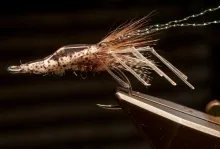
A simple, fast-to-tie shrimp pattern developed for Baltic sea trout
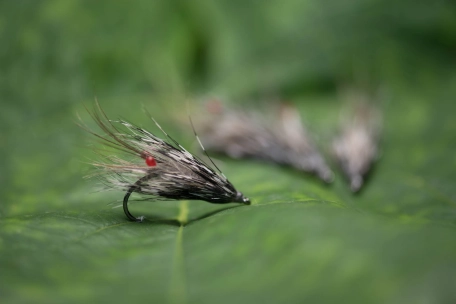
My goal was to create a simple, highly effective shrimp imitation that could be tied quickly and easily using only a handful of materials.
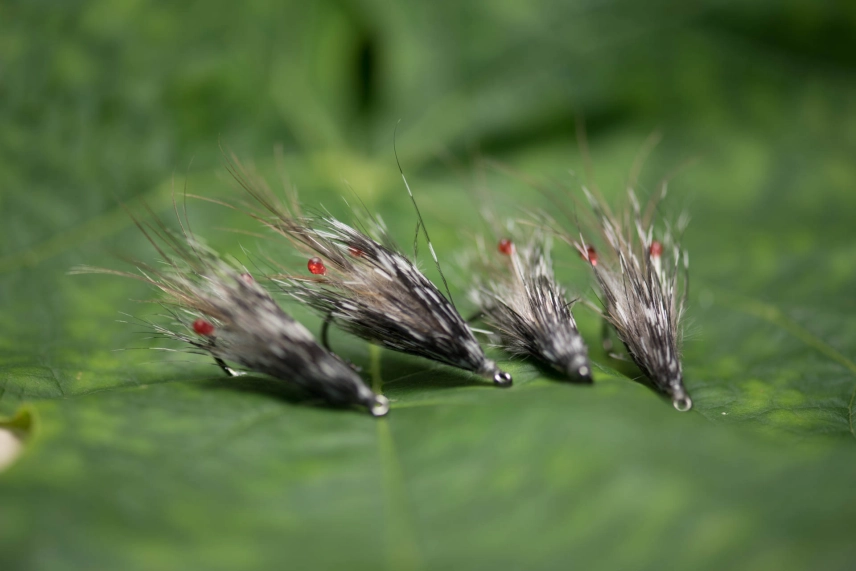
Its relatively small, compact, yet airy body, combined with the black-and-white speckled guinea fowl flank feather, creates a natural profile and silhouette underwater.
The PG Shrimp has proven especially effective during spring and fall in the clear waters of the Baltic Sea, particularly on difficult fishing days.
The name PG Shrimp is straightforward:
- P stands for Perlhühn (guinea fowl), the hackle material.
- G stands for Garnele (shrimp in English or reje in Danish).
This shrimp imitation doesn't require any flash materials.
With the proper materials and a little practice, the PG Shrimp is easy to reproduce.
Tying Instructions
1. Adding the Weight
After laying down a thread base on the hook shank, tie in a 4–5 mm section of 0.35 mm lead wire centered underneath the hook shank.
The amount of weight can be adjusted depending on the fishing conditions.
Positioning the weight beneath the shank gives the PG Shrimp stable swimming and sinking characteristics while enhancing its natural movement and escape behavior in the water.
Looking Back
When I first developed the PG Shrimp, I used a dubbing blend consisting of approximately:
- 75% light wild boar underfur
- 25% light rabbit dubbing
This mixture produced a great deal of bulk.
While it looked attractive, it made the fly's body thicker than I wanted.
Today I use only light brown rabbit dubbing for the body.
When wet, its color blends beautifully with the guinea fowl flank feather.
Another advantage is that the guinea fowl hackle lies tightly against the body in the water, giving the fly a much more realistic shrimp profile.
2. Creating the Mouthparts
Next, imitate the shrimp's mouthparts by tying in four or five wild boar bristles.
These are back bristles from wild boar. They're extremely durable and resist breaking, making them ideal for this purpose.
I'll continue with Part 2, covering the eyes, antennae, body construction, and the signature guinea fowl hackle.
3. The Shrimp Eyes
First, tie in a small ball of light brown rabbit dubbing just behind the hook bend and shape it into a neat foundation. Then lightly brush out the dubbing.
Next, tie in the eyes so they sit evenly at the rear of the hook bend. (Commercially made shrimp eyes work just fine as well.)
I make my own eyes using 0.50 mm clear monofilament fishing line. With a little practice, you can melt the ends over a flame to create evenly sized eyes. After they cool, color them with a red waterproof marker.
4. The Antennae
Tie in two antennae parallel to the eyes, then secure everything in place with a light coat of head cement.
The finished antennae should measure approximately 2 cm (¾ inch) from the eyes to the tips.
I prefer using wild boar back bristles because they have outstanding natural properties. They are flexible and taper into very fine tips, giving the fly an exceptionally lifelike appearance.
Andreas Jendrichowski
5. Building the Slim Body
Spin a sparse amount of light brown rabbit dubbing onto the monofilament tying thread.
Form a slender, tapered body as you wrap toward the hook eye, stopping about 3–4 mm short of the eye.
Once the body is complete, lightly brush it out.
Tip – The UV Resin Trick
To prevent the guinea fowl fibers from flaring away from the body, pinch them flat against the hook shank with your fingers.
Then apply a very small amount of UV resin all the way around the tie-off point, directly in front of the whip finish, and cure it.
This keeps the fibers permanently in place so the PG Shrimp maintains both its natural profile and its distinctive mottled appearance even after extended use
6. The Over-Hackle (Guinea Fowl Flank Feather) & the UV Resin Trick
To finish the fly, select a properly sized black-and-white speckled guinea fowl flank feather and tie it in by the stem.
Then carefully brush all of the hackle fibers forward toward the eyes and hook point so they lie evenly along the body.
Finish the fly with a whip finish.
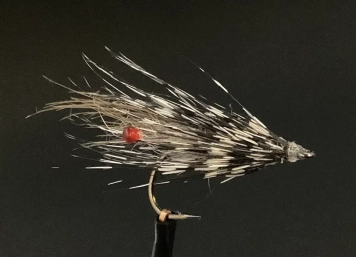
At this point, the feather creates the PG Shrimp's characteristic natural black-and-white mottled body pattern.
Ideally, the hackle fibers should extend approximately 3–5 mm beyond the shrimp's eyes, partially covering them.
Fishing the PG Shrimp
The PG Shrimp was designed to imitate one of the sea trout's most important food sources: small coastal shrimp.
Like the real thing, the fly fishes best when it is presented close to the bottom with a natural, lifelike action.
After the cast, allow the fly to sink to the desired depth. Then retrieve it with a series of short, gentle strips, interrupted by brief pauses.
It is often during these pauses that the fly sinks slowly and naturally—just like a fleeing shrimp—and many strikes occur at that moment.
The pattern is equally effective on a floating line, an intermediate line, or a slow-sinking line. The best choice depends on water depth, wind, and current.
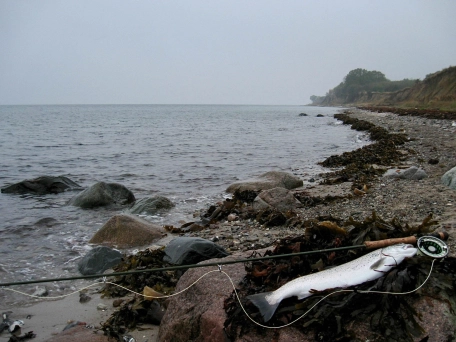
When the PG Shrimp Excels
The PG Shrimp has proven itself over many seasons, especially:
- during the spring season, when shrimp are a major part of the sea trout's diet.
- in autumn, when fish are feeding actively along the shoreline.
- in clear water where a subtle, natural presentation is essential.
- and on difficult days when brightly colored or flashy flies are ignored.
Because the pattern contains no flash material, it has a subdued, realistic appearance that often convinces wary fish.
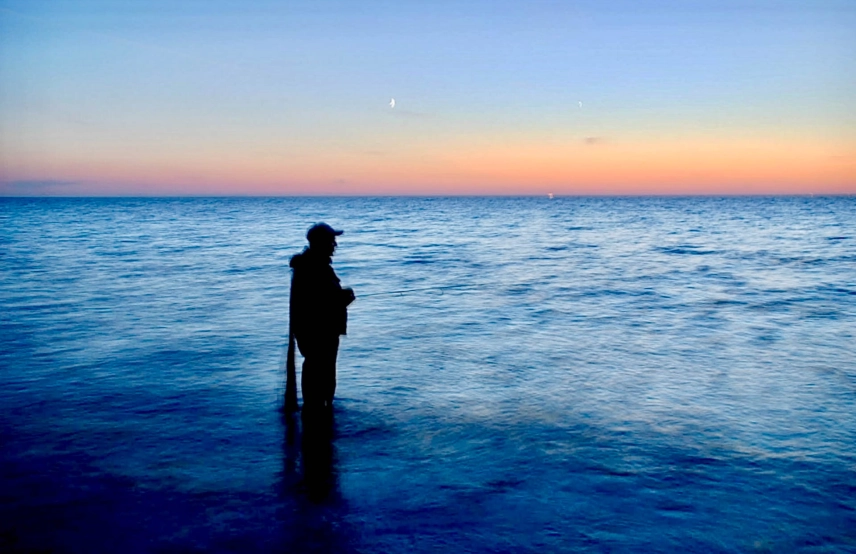
A Simple Fly with Great Confidence
One of the biggest advantages of the PG Shrimp is its simplicity.
It requires only a small number of materials, can be tied quickly, and is durable enough to withstand many fish.
Over the years, it has become one of my personal confidence patterns for coastal sea trout fishing.
Again and again, it has proven that a simple, naturally presented fly is often more successful than an elaborate pattern loaded with extra materials.
The black-and-white mottling of the guinea fowl feather, the slim dubbed body, and the natural movement of the wild boar bristles combine to create a convincing shrimp imitation that sea trout readily accept.
Final Thoughts
Sometimes less really is more.
The PG Shrimp demonstrates that a fly doesn't have to be complicated to be highly effective. With a few carefully selected natural materials and the right presentation, it becomes a dependable shrimp pattern for almost any coastal situation.
Whether you're fishing shallow bays in spring or working deeper edges in autumn, the PG Shrimp deserves a permanent place in your sea trout fly box.
- Log in to post comments