Recent comments

Martin, thank you. However I

Martin, thank you. However I was only unfamiliar with the term LCR Not the actual materials. I use uv curing resin all the time. In fact most of the videos posted from me (including this one) are using some sort of resin. I use solarez mainly because of the price.

This is similar to many other

This is similar to many other mullet and baitfish patterns, but with a few slight differences, let me know whatcha think of it. Tell me what you would do different?

Ok I know what LCR is now...

Ok I know what LCR is now... Light curing resin... Basically uv epoxy. Ok yeah, sorry...

Sorry, I'm not familiar with

Sorry, I'm not familiar with LCR, what is that?

LCR or a guard

Shawn,

I think the you will either have to add some epoxy or LCR http://globalflyfisher.com/tie-better/light-curing-resins to the base of the wing and maybe a bit along the back, not totally disabling it from moving, but keeping it from totally wrapping around the hook. I have had this exact problem in some pike streamers that I tied, which ended up as a mess, wrapped around the hook.

Another option might be a monofilament guard - a simple horizontal, drop shaped loop in the rear of the hook, sticking out far and wide enough to keep the wing from fouling. Tie it in before the body and make it maybe a third of the wing length.

Martin

Thanks PJ. I will try that.

Thanks PJ. I will try that. Probably the later (as like you said there is too much thickness at the base) Maybe super glue will be better than epoxy, in fact I think it will be. Thanks!

Submitted by Hooké on

Permalink

Thanks for sharing the vibes!

Thanks for the share guys! We really appreciate, keep the good fly fishing vibes going.

Glass minnow anti-foul

One thing that you might try that I have only read about (haven't actually done it myself yet) is to make about 6-7 thread wraps around the base of the wing, almost as you would for a parachute poste. Only you do not have to go up the post, only around the base. This ought to be enough to keep it from sagging onto the hook. You can always stiffen it up a bit with a drop of superglue at the base-just a little. Try it both ways and let us know what works best. If the base of the wing is too wide to wrap it all, try just wrapping the most posterior part. You may have to experiment a bit.

Multilingual

Craig,

I take the liberty of mocking anybody who pretends to be professional in any language.

English isn't my mother tongue, but anything I write as a pro (which includes GFF in spite of it non-commercial nature), I try to write correctly. I venture into my native Danish, English, sometimes German, Swedish and even French, but I do not master any of these languages perfectly. I speak and write a couple better than the others, but if I'm in doubt, I get the help from someone who does - or simply leave it.

I deeply respect people who master more languages and try to communicate using anything other than their own, but one thing is chatting or mailing as friends or passing acquaintances, another is doing business and being professional. In that case a helpless communication full of errors sends some signals, and it's not one of professionalism.

Martin

Can you guys help me improve

Can you guys help me improve this? It fouls on the hook sometimes, any way you can think of keeping this from happening? I was thinking of epoxying up the material a bit, but what I love about this fly is the movement in the water, I'm afraid that will be hindered.

I also tie this with a

I also tie this with a brownish grizzly hackle for the tail, it then becomes a great redfish and seatrout fly, mimicking shrimp.

Another great way to tie this

Another great way to tie this is with estaz chenille.

Submitted by Craig on

Permalink

Language

I was taught never to mock someones English or grammar. They are multilingual and I am not.

Submitted by George Meyer on

Permalink

Great book.

Great book,in my personal library as I type.

Haha! Or could call it "the

Haha! Or could call it "the bearded dragon". Since my hair is red and dragons breath fire! Haha. Not sure if I want to cut off my beard hair though...

Yeah, you could call it "The

Yeah, you could call it "The Beard" only problem being, only real men, with real beards, would be able to tie it. It could be the next fly tying hit, and go viral.

Let me know whatcha guys

Let me know whatcha guys think of the fly? I'd like some constructive criticism. Don't worry about offending me. Haha.

Submitted by NEIL on

Permalink

Nicely tied

Nicely tied

Kalby64 maybe I should make a

Kalby64 maybe I should make a fly with my beard hair? Lol.

Thats funny, I thought at

Thats funny, I thought at first the the beard was some of the material that would be used in the fly :-)

Paul

Submitted by Phil on

Permalink

Light cured resins

Photo initiated resins have been around since the late 1970's but have recently become inexpensive enough for general use. In dentistry the first ones were indeed UV light initiated, but the wavelength was soon changed due to a concern about carcinogenicity, even though the exposure time was very short. Manufacturers moved to the blue part of the spectrum- around 480 nm. This worked very well until the introduction of LED lights, when some materials would not cure with lights from other manufacturers due to the vary narrow spectral range of the LEDs. This was soon dealt with by using a group of LEDs with slightly different wavelengths in the lights. Cures and color stability became more reliable. I am fairly sure that none of the resins currently on the market are UV initiated. They would have to be checked with a photometer to be sure. They probably all come out of the same barrel from a chemical company in Germany. Small companies could not do the chemical production required..

Since you got this far …

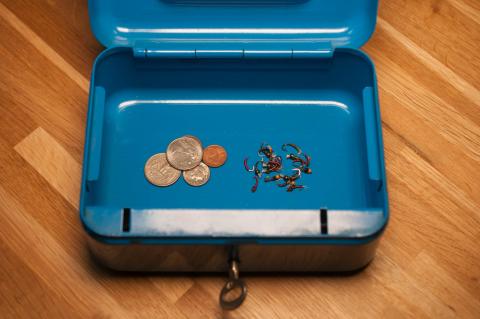
A money box
The GFF money box

… I have a small favor to ask.

Long story short

Support the Global FlyFisher through several different channels, including PayPal.

Long story longer

The Global FlyFisher has been online since the mid-90's and has been free to access for everybody since day one – and will stay free for as long as I run it.
But that doesn't mean that it's free to run.
It costs money to drive a large site like this.
See more details about what you can do to help in this blog post.