
Recent comments

Submitted by Scoot B on

Permalink

I agree with Max, Fu

I agree with Max, Furled Leaders are the way to go. They last a very one long time and they present a fly like nothing other. If you want to make them yourself, there is more than enough info on-line to figure it out. If your into buying them, just google furled fishing leaders, there are a few good companies selling them. I personally prefer thread leaders for dry fly fishing. Fluoro fo nymphing.
Submitted by Dana Wilson on

Permalink

We have sea run browns

We have sea run browns coming back to a few streams late in the fall. So I hope your book is out before then. I enjoyed the audio of your Feb head shooting trip. I learned quite a bit. I will be making some heads soon for easing the casts to stripers. Your article on heads is super. What about sink tips looped to floating heads? Does that make any sense? Backing/running line/WF F head/ various 3 meter sink tips /leader? If so,do I shorten the rear of the head by 3 meters to compensate for the sink tips? ....Damn nice site by the way DW New Hampshire USA

The best looking sand-eel

The best looking sand-eel imitations I haver seen. 8)

I don't fly fish in the sea

I don't fly fish in the sea much, but being an east coast Scot, I do know
something about herring. They were the staple diet of my ancestors for centuries.
Those look good enough to eat. 😄
That fish you caught looks a beauty.

A great trip and great

A great trip and great pictures.
I really like small bead head nymphs, they are a very successful
fly for grayling and brownies in small burns (creeks) here in Scotland.
Continue the good work.

A very nicely dressed nymph,

A very nicely dressed nymph, it is probably a very good fish catcher.
What have your catch results been like?

Submitted by 1737246345 on

Permalink

realy like this pict

realy like this picture

Sarah,

As Martin

Sarah,

As Martin said the Tail of Salminus maxillosus.

Heiko Schneider, the author of the article

Let us all hope that

Let us all hope that you will find proper solutions for those problems.
Goodluck,

Best regards from Tom Biesot.

Submitted by Eric on

Permalink

Great video, simple

Great video, simple to tie and works like a charm!

Submitted by Martin van der… on

Permalink

Keep on the good wor

Keep on the good work, Martin!

Goodluck.

Sarah,

Just as th

Sarah,

Just as the caption says: The beautiful tail of a dorado

Martin

Submitted by Sarah Fox on

Permalink

This is the tail of

This is the tail of a Dorado?! Please contact me at sgilbertfox@fisheries.org, if you get a moment. Thank you!

Dear Joseph,

The

Dear Joseph,

The "poor treatment" is actually a pretty gentle treatment. Brown trout are surprisingly tolerant when it comes to handling. Many of them with a thick leathery skin and a protective layer of mucus, the purpose of which is exactly to protect the fish. This mucus or slime will be regenerated if it's worn off. The whole idea of the leathery, slimy skin of stream fish is protection. They endure some really rough treatment during flooding, when passing rapids and when moving between rocks and branched in the water.

Of course you shouldn't rub the fish around in the grass or place it in gravel or rubble, but landing it gently by hand and laying in the soft grass for a photo is hardly any tougher on the fish than netting it.
These fish are all back in the water within a minute and oftentimes much less, and I doubt they be worse off than if they were just lifted out of a net for a photo and then released.

Some fish are much more vulnerable like loose scaled sea run or saltwater fish. Loosing the scales can be a severe problem, because they take time to grow out again and won't grow if the tissue below is damaged.

Martin

Submitted by Joseph on

Permalink

If it is only catch

If it is only catch and release, then why the poor treatment of the fish by laying him on the grass? That does some serious damage to his protective slime.

Submitted by Davy on

Permalink

I am very interested

I am very interested i'n getting a look at these DVDs i'n English

Submitted by Gareth on

Permalink

This is the best description

This is the best description of buzzer (midge) fishing I have seen. The long leader method is deadly with other midge imitations as well

I am the author

Jan,

Yes, I am the author... and the designer, publisher, photographer, proof reader and any other role you can think of.

The new book sits on my computer and is about 80-90% done. It's been quite a lot of work to get it ready, and I'm still adding patterns, although I'm running out of patterns that I actually use or have used, and that's the whole idea. The book will cover my own and my nearest fishing friend's favorite flies for sea trout.

My guess is that it will be another month or so before it's available on Blurb. I will annonce it here just like the other GFF books.

Martin

PS: It's now published: Favorite Flies for Baltic Seatrout

When and where

Hej Martin,

thanks for your description of this "old" one and your variations about it! You mentioned a new book "Favorite Flies for Baltic Sea Trout". When and where will it be published and are you the author?

Best regards

Jan

Submitted by klausrotermund… on

Permalink

Hi. Is there a Video

Hi. Is there a Video to buy about kvarken Pike fishing??

Dave,

Click on th

Dave,

Click on the picture or any link back to the article and read it. That gives away the secret...

Martin

Bubba,

Here in De

Bubba,

Here in Denmark they can be bought in any tackle shop - like here. I'm not sure how common or popular they are elsewhere.

Martin

Submitted by dave barson on

Permalink

what do you use for

what do you use for body?

Since you got this far …

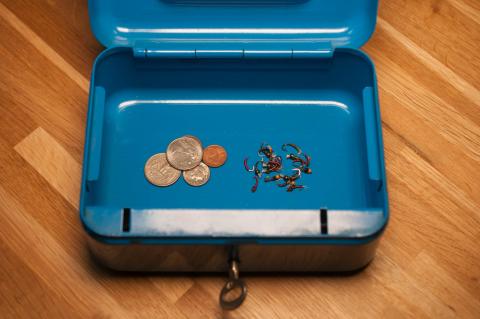
A money box
The GFF money box

… I have a small favor to ask.

Long story short

Support the Global FlyFisher through several different channels, including PayPal.

Long story longer

The Global FlyFisher has been online since the mid-90's and has been free to access for everybody since day one – and will stay free for as long as I run it.
But that doesn't mean that it's free to run.
It costs money to drive a large site like this.
See more details about what you can do to help in this blog post.