It’s one of the most exciting and intense fishing experiences you’ll find, and here’s how to get started
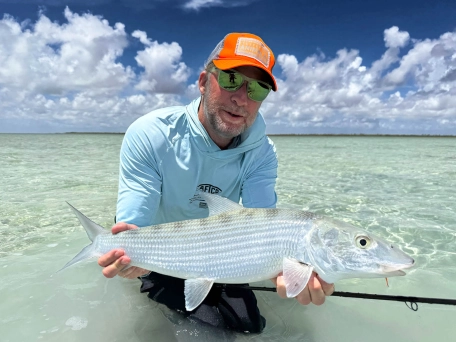
Fly fishing for bonefish on the flats can be one the most exciting and intense fishing experiences you’ll find. It’s a true test of your sight fishing abilities, and a game of patience and skill as you stalk one of the ocean’s fastest and most elusive fish.
With over 26 years of experience in flats fishing, I’ve picked up a few tricks that I’m happy to share, helping you find the approach that suits you best.
The grey ghosts
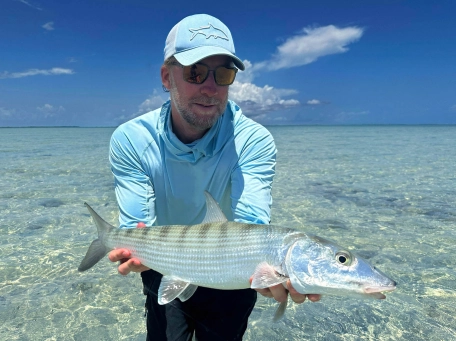
Bonefish are renowned for their speed, strength, and elusiveness, making them a prized target for fly fishermen. Known as “grey ghosts” for their ability to blend seamlessly into the sandy flats, these fish are typically found in shallow, tropical waters around the world, including the Caribbean, Florida, and parts of the Pacific and Indian Oceans.
While bonefish can grow up to 16 pounds, most range from 3–6 pounds. Though not the largest fish in the ocean, they are, in my opinion, the strongest fish for each centimeter of length.

Feeding behavior
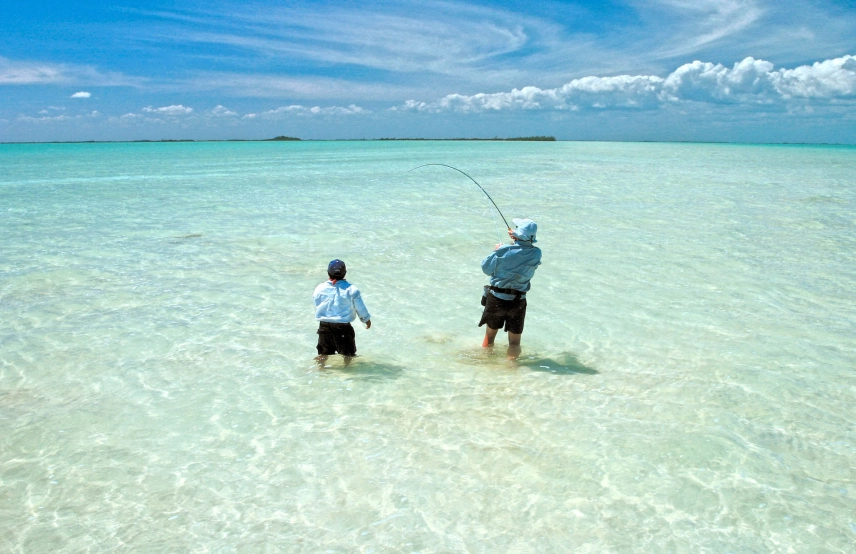
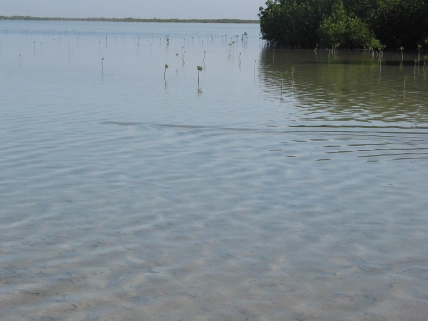
What makes bonefish such a fantastic target for anglers starts with their feeding behavior. They follow the tides, moving onto the shallow flats, lagoons, and mangroves to feed as the water rises.
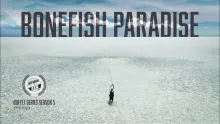
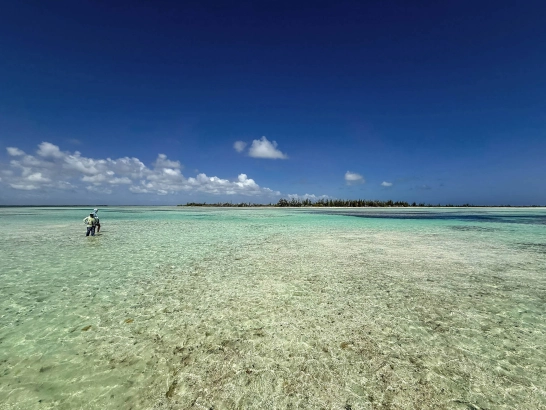
Flats are shallow plateaus rising from the sea. Often, you’ll find yourself fishing for them in ankle-deep water, spotting their backs braking the surface as they move across the shallow waters.
They also venture into tight mangroves to feed, but hooking them there presents its own challenge – fish often break off in the mangroves when they make their signature torpedo-like runs.
As the tide recedes, bonefish retreat to deeper waters, waiting for the next cycle to draw them back to the flats.
When the tide goes out, you’ll often notice small dark holes, about 5–8 cm in diameter. These are signs of bonefish digging for food, leaving behind telltale marks of their foraging.
Spotting fish
One of the most exciting moments in bonefishing is spotting a tailing fish – its tail sticking out as it digs for food. A tailing fish can however be tricky to catch. While a well-placed Puff fly can work, they often miss it as they dig, and the stirred-up sand makes it harder to see the fly.
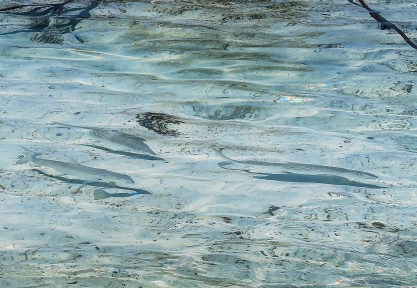
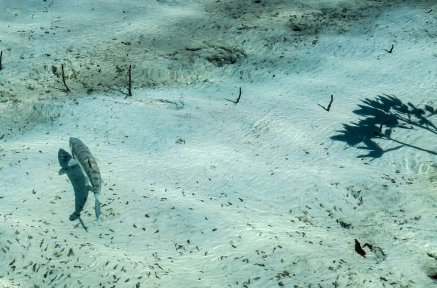
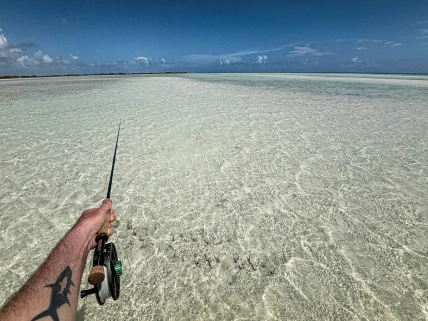
Bonefishing is as visual as it get – no blind casting here! For my style of fishing that is. These fish can be nearly invisible, but sometimes you’ll spot them pushing waves in the distance. Always on high alert when in the shallows, they’re quick to spook, knowing predators lurk above.
Stealth is everything. You have to move carefully, read their direction, and place your cast 2–3 meters or 6-10’ ahead. If you are too close or your fly line splashes, you will send them fleeing. It’s all about presentation and precision – you mostly get one shot. Spook one, and the whole school often vanishes.
Where to begin
Let me help you find the type of fishing that suits you best. Just like with salmon and trout fishing, we each have our preferred waters, techniques, and experiences – and the same goes for saltwater fishing.
Start by considering your skill level. Some destinations offer numerous bonefish, though they may be smaller on average, making them great for beginners or anglers seeking lots of action.
Budget of course plays a role which comes down to the level of services. Many saltwater locations feature comfortable, high-end lodges, there are also DIY options available. Experienced guides are essential in saltwater compared with a river! Their local expertise can make all the difference.
Being mobile with a boat gives you a significant advantage, allowing you to adjust to the tides and cover expansive areas.
Alternatively, a canoe trip in the Bahamas could provide a more adventurous, off-the-beaten-path experience and just stay in a rented house.
My recommendation: Always have an experienced guide and boat! You are often two anglers on the boat to split the cost. This is not where you want to save when having flown to the other side of the planet.
Nils Folmer Jorgensen
My journey to the flats
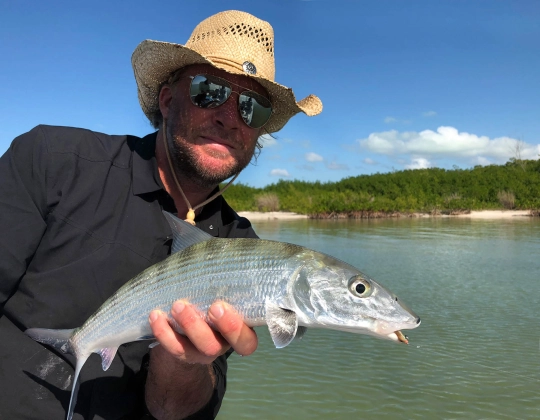
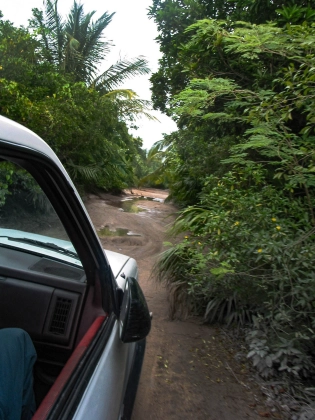
My own journey started 26 years ago, in an almost unreachable fishing village deep in the Yucatan jungle. To reach it, we had to brave a long, bumpy dirt road through dense jungle, often washed out by storms. At the journey’s climax was a notorious, rickety bridge that was anything but reliable. There were times when crossing it was impossible. But when the stars aligned, we found ourselves in Punta Allen – a humble, remote fishing village at the end of the world. This article tells the story about a trip to Punta Allen.
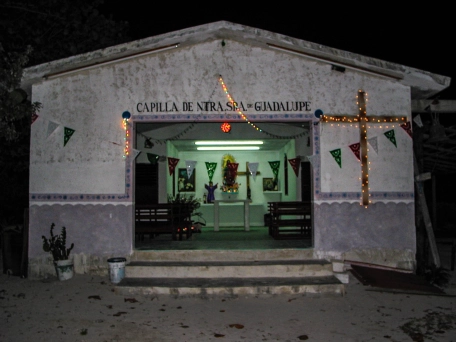
Back then, there were no lodges, just a simple house built by an American couple that we rented. The accommodations were primitive, but that was part of the charm. Our guides weren’t seasoned fishing experts but rather local bird guides who knew how to navigate Ascension Bay’s expansive waters.
The fishing was nothing short of magical. Bonefish darted across the flats, and there was no shortage of permit, snook, and juvenile tarpon. One morning stands out vividly: a school of fish was coming out of a lagoon, and over two hours, I landed 16 fish – pure bliss for a newcomer to flats fishing.
However, with time and growing experience, I realized that the bonefish in Ascension Bay were quite small, and I began searching for new waters with larger specimens. Belize offered similar opportunities, including the chance for the Grand Slam (bonefish, permit, and tarpon in one day), but the size of the bonefish remained modest.

13 years later
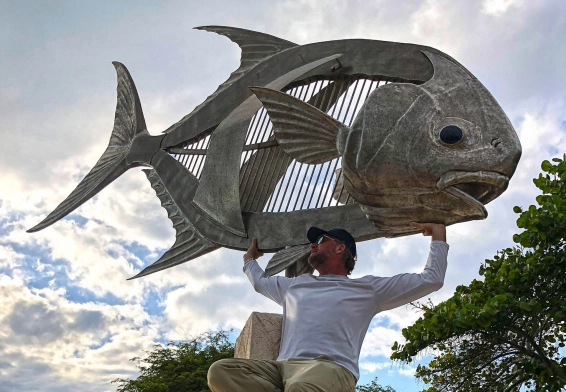
When I returned to Ascension Bay in 2018 after a 13-year break, things had changed. What had once been a secluded paradise was now bustling with boats from at least six lodges. We stayed at the new luxurious Grand Slam Lodge – a stark contrast to the days of “bucket bathrooms.” The comforts were welcome, but the sheer number of anglers meant we rarely fished the classic permit flats. But that’s a story for another time.
Both Ascension Bay and Belize is today known for being some of the best Permit waters on the planet!
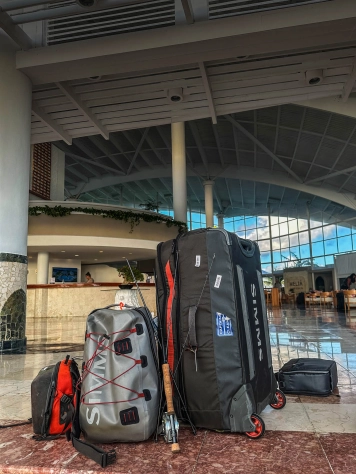
In Punta Allen and Belize, you have to bring you own gear!
Wading vs. boat fishing
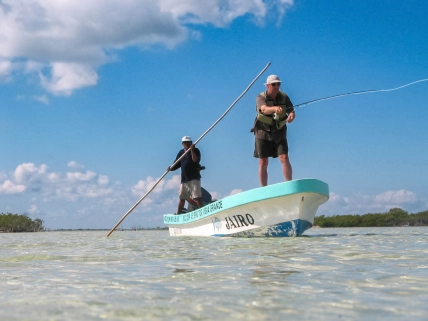
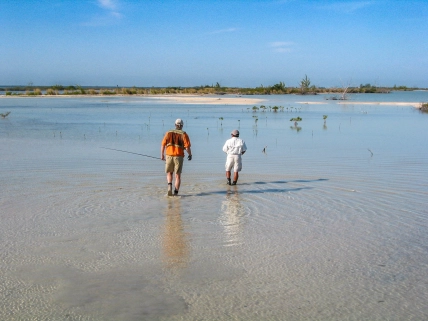
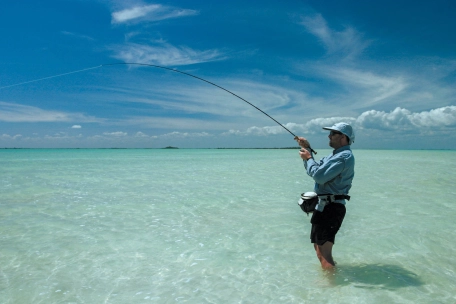
One thing I quickly learned about myself: bonefishing is most fun and effective done wading. For me, most fun in ankle- to knee-deep water. Wading adds an entirely different dimension to the experience – the feel of the water around your feet, the quietness, and the thrill of stalking the fish on foot and importantly, you are much more effective as a stalker on foot!
It’s far more engaging than fishing from a boat.
Boats, while essential for moving between flats and lagoons, are noisy and spook the fish. They can’t access the shallower areas where many bonefish feed. However, if you’re targeting permit or tarpon, you’ll often need to fish from a boat, as they’re usually in deeper water.


The “Muds”
When bonefish move out from the mangroves or shallow flats into deeper waters with the tide, they often create what’s known as “muds.”
These are patches of stirred-up sediment caused by bonefish digging for food. Muds can range in size from small clusters to massive clouds formed by up to hundreds of feeding fish. Even in waters as deep as two meters, these often white, cloudy plumes are easily visible.
Fishing for bonefish in the mud is simple: use a heavier fly and cast directly into the cloud. The fish are less skittish here and generally easy to catch. While this approach may not excite the flats anglers, we often head out chasing permit or tarpon on the high tides. But muds can turn around a tough day on the water and is excellent for beginners looking to build confidence and experience.
Exploring
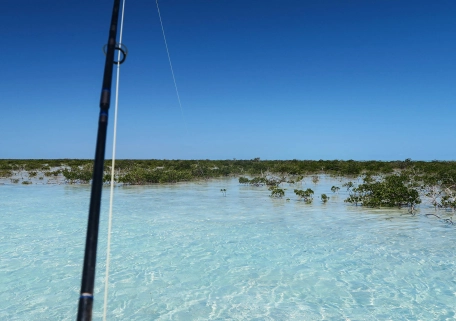
Each winter, as the cold and dark grip the North Atlantic and I wait for the salmon to return, I embark on 4-5 saltwater fishing trips around the world. Over the years, I’ve chased countless species, but the classic flats fishing for bonefish, permit, and tarpon never gets old. With that foundation, I’d like to share key places I’ve fished to highlight the diversity of experiences available.
I’ve tried destinations where the fishing was less than exciting, like the Dominican Republic, which has no official flats fishing. My fishing buddy and I however found a flat on Google Maps and convinced a local net fisherman to take us out there. It was a thrilling experience, pioneering new waters – though challenging without proper knowledge of the tides and with a net fisherman aboard. Unfortunately, near populated areas, overfishing has wiped out many species for food.
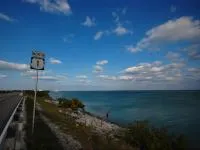
I spent considerable time in the Dominican Republic having some work there. Each morning, I would drive along a calm to the office, inviting sea that seemed full of possibilities. Offshore fishing is excellent, but flats fishing is almost nonexistent.
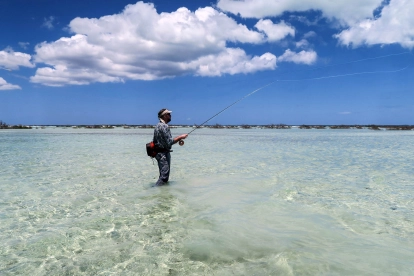
Bahamas: Crystal waters and endless possibilities
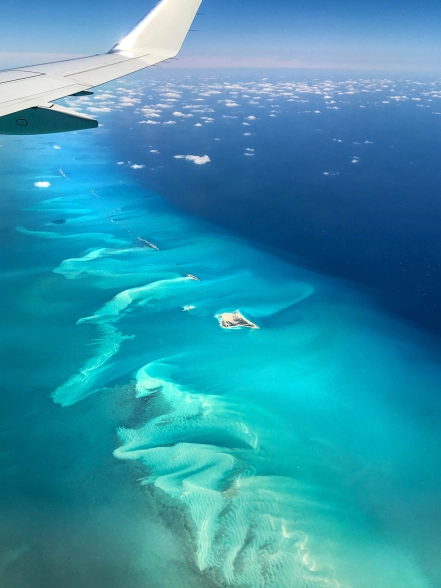
For classic flats fishing, the Bahamas delivers in spades. The crystal-clear waters, diverse marine life, and many picture-perfect white sand flats make it a dream destination. With approximately 700 islands and over 2,400 cays and islets scattered across the Atlantic, the fishing options are endless.
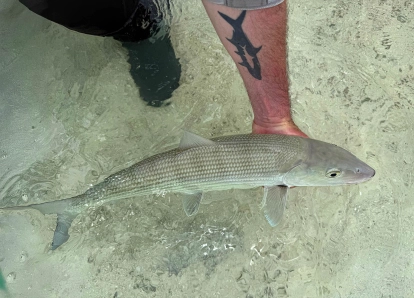
That said, I found the Bahamas primarily bonefish-centric. After a good morning with ten bonefish, I crave the challenge of pursuing permit or tarpon. While some places in the Bahamas reportedly offer permit and tarpon fishing, I haven’t had that experience myself. But there are many bonefish in the sizes from 2-6 pounds! I know of record size fish from Bimini but if the average size is bigger there, I don't know.
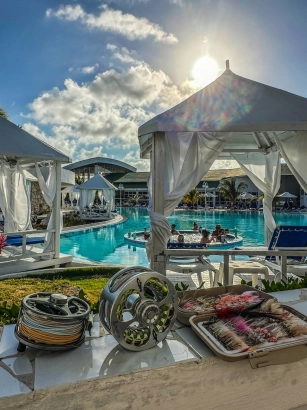
The Bahamas also provides both high-end lodges and excellent do-it-yourself options. I’ve always dreamed of exploring these waters by kayak but somehow end up as the lazy guy at a lodge enjoying the full package. One thing worth noting: the Bahamas can be expensive.
Nils Folmer Jorgensen

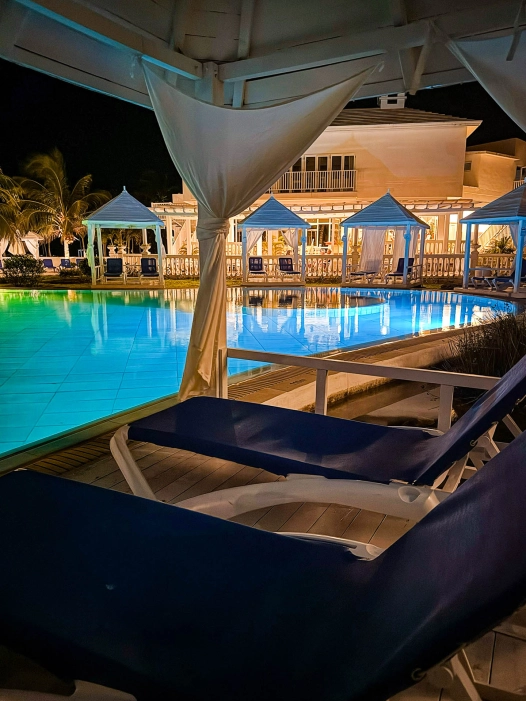
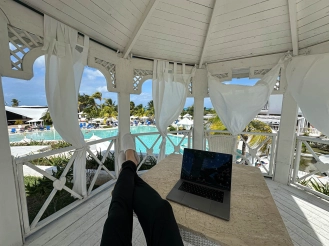
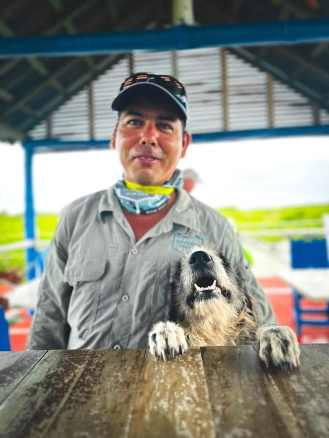
Cuba: A saltwater paradise
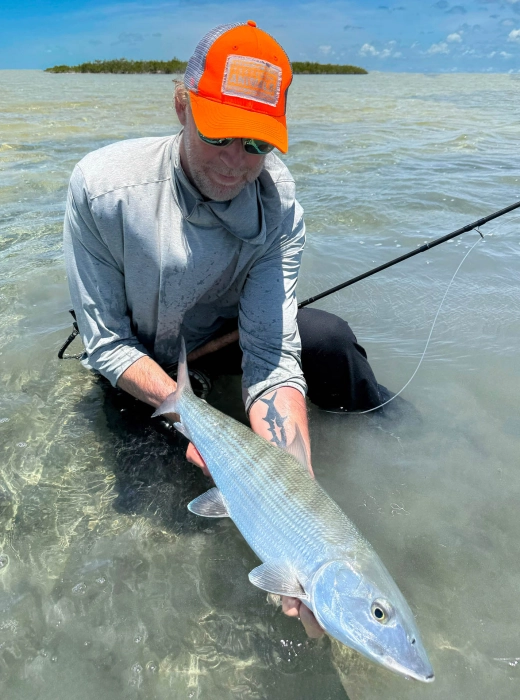
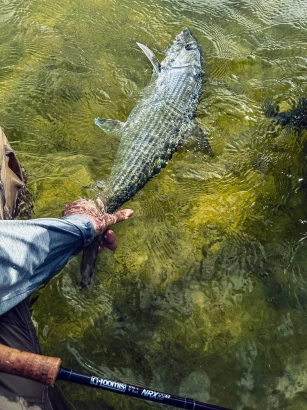
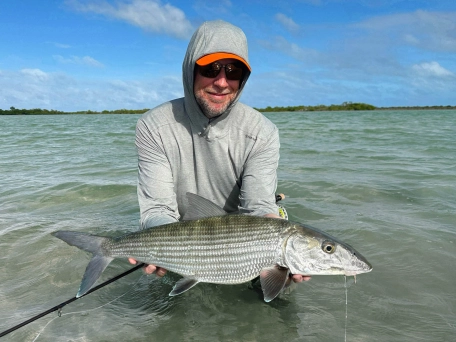
Cuba is a destination that I think has it all. The north side, in particular, has captured my heart with an impressive average sized bonefish, great permit, and tarpon fishing. The bonefish here are noticeably larger – 10-pound catches are common on every trip. While the south offers more fish, they tend to be smaller.
What also makes Cuba unique is its remote wilderness and endless variations of flats and lagoons. The tides create that perfect scenario where you can target all the species in one day. On my last trip to Cuba, we fished for six days without seeing a single other boat. This not only enhances the angler’s experience but also preserves the fishery from excessive pressure.
Cuba is a peaceful escape, like stepping back in time. It can be pricey like the Bahamas, but there are ways to “get through the backdoor” – though it comes with risks and limited insurance options.
In Cuba, you have to bring you own gear!
Florida: The wildcard
Fishing in Florida is a whole different experience. Guides are mobile, moving their boats on trailers and launching them where they believe the fish are. The fishing grounds are vast, and having a knowledgeable guide who understands tides and weather is crucial. I’ve had both phenomenal and disappointing guiding experiences here.
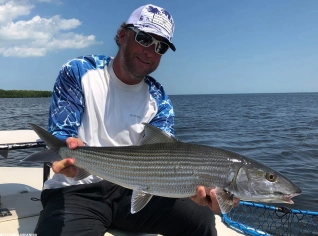
Whether you’re fishing the Everglades, the Keys, or Biscayne Bay outside Miami, most of the action happens from a boat. This isn’t my favorite way to fish, but Biscayne Bay presents one of the biggest challenges. With a often dark, grassy bottom and deep water, spotting fish is incredibly difficult. But when it all aligns, you’re fishing for the biggest bonefish in the world just outside Miami. I once caught a 10-pounder out of a group of four – and mine was the smallest!
Out in the outer Keys, I’ve fished beautiful sand flats but still from a boat. In the Everglades, I’ve never caught a bonefish. Locals say “The Cold” – an exceptionally harsh winter – wiped them out, though tarpon and permit fishing have rebounded nicely. It’s only a matter of time before the bonefish return.
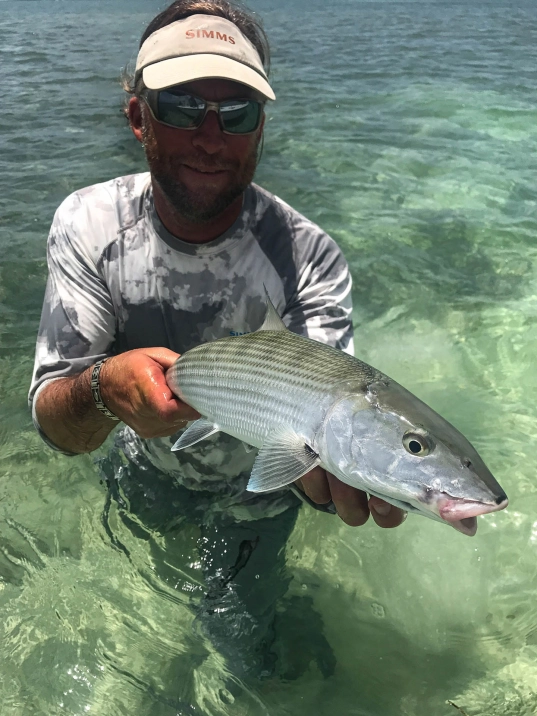
One of the things I appreciate about Florida is the variety. You’re always switching between species. In May, the focus is on massive migrating tarpon, but I often spend a few hours chasing bonefish after a quiet morning. Offshore fishing can also save the day and provide an exceptional dinner.
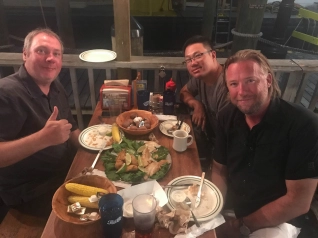
In Florida you skip lodges and stay at or rental houses. After wrapping up around 3:00 p.m., there are plenty of fun things to do in the Keys. Bringing a freshly caught snapper or tuna to one of the dockside restaurants for preparation is a fantastic way to end the day. Sun, fishing, good food, and sleep – what’s not to love?
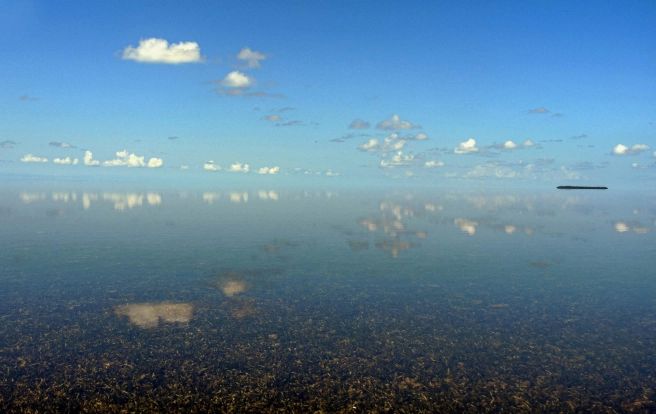
Fishing for bonefish in Florida isn’t for beginners, at least not for fly fishermen. With a spinning rod and shrimp, these elusive fish however become far too easy to catch.
If you go, get a personally recommended guide who knows bonefish well!
One standout feature of Florida fishing is that the guides usually have all the necessary gear ready on the boat – something that’s quite rare in other destinations. If you’re ever in Miami, you can hop into a boat and start fishing without the hassle of packing your own gear, which is a convenient perk worth mentioning.
On a final note, while Florida sees its share of boat traffic and anglers, the fishing pressure isn’t as overwhelming as some might suggest. The real crowds tend to gather around bridges, where tarpon anglers set up with bait and anchor, waiting for a bite. However, flats fishermen remain a smaller group, so the pressure on those waters remains relatively light.
Other destinations
There are, of course, other destinations such as the Seychelles, Christmas Island, and St. Brandon’s Atoll. What they all have in common is extensive travel.
The Seychelles offers outstanding bonefishing, but prices have climbed steeply, due to the islands’ reputation for giant trevally fishing, which now dominates much of the angling focus there.
I haven’t fished Christmas Island or St. Brandon’s. St. Brandon’s has caught my attention, but the journey is demanding – long international flights followed by an additional 36-hour sea crossing – which has put the destination on a big hold. That said, I have spoken to two anglers who have fished St. Brandon’s who told captivating stories of endless white sand flats and exceptional numbers of large bonefish, making it a place that continues to linger in the back of my mind.
Conclusion
Choosing the right destination comes down to how much of your hard-earned cash you’re willing to spend and what kind of experience you’re looking for. Consider factors like technical difficulty, catch numbers vs. trophy fish, accessibility, seasonality, wading vs. boat fishing, and lodging options.
Here are a few recommendations:

Yucatán & Belize
Pros:
- Plenty of fish and multiple species
- Boat and wade fishing
- Many lodges to choose from
- Great value
- Ideal for beginners
Cons:
- Generally smaller fish
- Higher fishing pressure
- Limited number of highly experienced guides (though good ones exist)
- Communication with guides can be challenging due to language barriers
Bahamas
Pros:
- Excellent fishing quality
- Well-established lodges
- “Do-it-yourself” fishing options available
- Endless world-class flats
Cons:
- Expensive
- Limited tarpon and permit fishing (at least in the areas I’ve fished)
Cuba
Pros:
- Outstanding fishing
- Vast, untouched flats and lagoons
- Large average fish size and multiple species
- Great for both beginners and experienced anglers
Cons:
- Food isn’t the highlight, but it’s decent
- Service can be limited
Florida
Pros:
- Massive bonefish and diverse species
- Endless fishing grounds
- Great social scene off the water
- Easy to book day trips
- Guides provide all necessary tackle
- Good option for family trips
Cons:
- Technically demanding – can be challenging
- Expensive
- Often windy, which can make conditions tough
- Expensive hotels
The gear
This isn’t a full tackle guide, but here are a few recommendations.
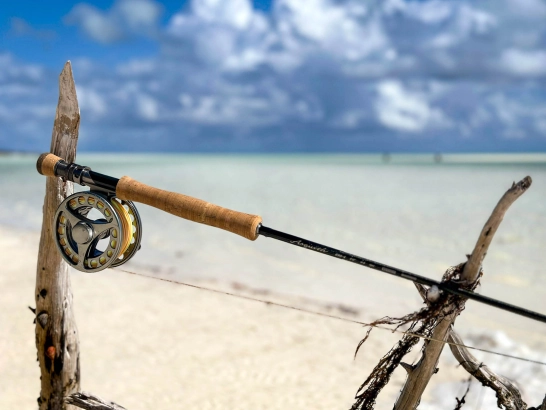
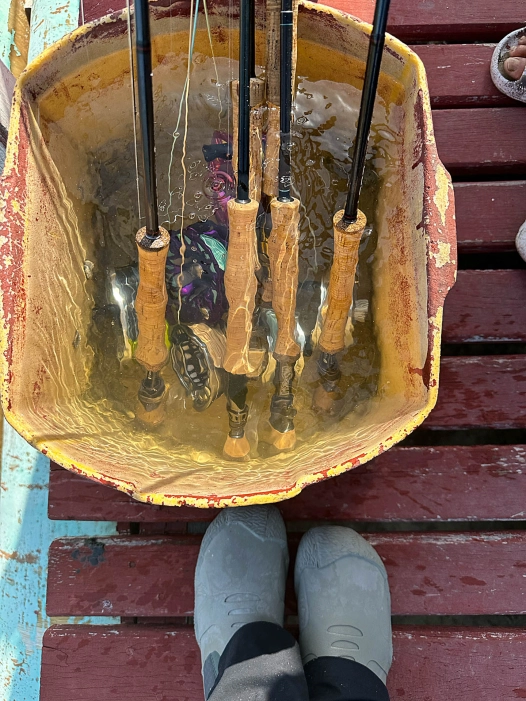
Most outfitters suggest ultra-fast (extra stiff) saltwater rods, but I believe they aren’t ideal for bonefish. Since bonefishing is primarily about delicate presentations at 10–20 meters, I prefer a medium-fast to fast action rod. But you need some power to handle wind, casting to moving fish and powerful butt section the fight the fish.
Fly line choice varies widely. Manufacturers offer belly lengths between 12 and 16 meters, but I find these difficult to cast in the often fresh tropical winds. If I could design my own, it would have a 10-meter belly for quick loading and better wind performance. While such a product doesn’t exist with a simple taper in tropical saltwater lines, I’ve been using Scientific Anglers Magnitude Lines in recent seasons. They’re not perfect but are the best all-rounders I’ve tried, with unmatched quality.
Pair this with a 9-foot tapered leader and 1 meter of 12–16 lb tippet.
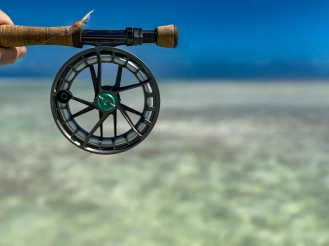
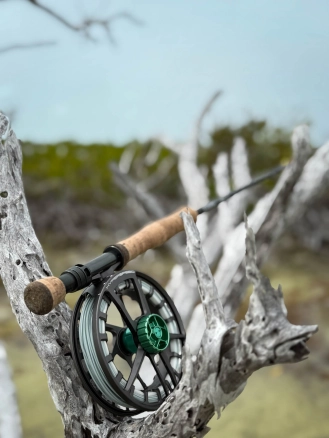
For reels, a large-arbor fly reel with a smooth drag and zero startup tension is essential. Load it with 180 meters of backing, and you’re set. An ultra-large arbor is particularly useful – it helps pick up line quickly and provides fast retrieval when a fish runs toward you.
The weight of a fly reel isn’t a major factor here since you’re only casting when you spot a fish, not continuously. Therefore, it doesn’t need to be ultra-light – durability is far more important in the wilderness.

Rod Recommendations by Destination
Yucatán & Belize
#6 rod, with a #7 for windy days. A 3-pound bonefish on a #8 barely bends the tip
Bahamas & Cuba
#7 and 8 rod preferred, with a #8 for windy days. #8 can also double as a permit rod
Florida
#8 all the time
Nils Folmer Jorgensen
- Log in to post comments