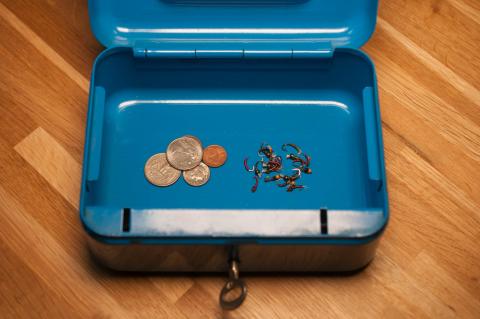
I just wondered how it is that my father, Bob Kenly, has been published in a fishing magazine for NOT catching fish? Am I missing something here??? I'm not an expert Dad, but I'm pretty sure people want to hear about the actual CATCHING of fish. Looking forward to the gripping conclusion! Haha!
Recent comments
Nice video and fish.
They do need some release etiquite. How about a little face up current, forget the glamour shots!
I have done scuba diving for decades and the water temp where I live in Monterey, CA runs from 48-54 degrees throughout the year. My hands and feet would get cold until I invested in a drysuit that kept my body a lot wamer as my body was not having to warm up the 48 degree water that got inside my wetsuits by 50 degrees to my body temperature. The human body had natural mechanism to protect the core when it is too cold and that consists of shunting off the blood flow to the hands and feet and then the head. With the dry suit my core was warmer and so I had more blood flow to my hands and feet. Wearing same hood and gloves my hands and heat stayed warmer as a result of my core being warmer. Same applies to wading chest deep in cold water. Keep the core warmer and unless you are standing on ice your feet will stay much warmer.
The mitre cutter hand shear can be bought on Amazon. Read the reviews carefully; most of these mitre cutters are used to cut soft woods like pine and basswood (linden, lime). As a woodcarver, I can tell you that I constantly hone and strop, (not sharpen unless the edge is damaged), my knives and chisels, even when carving basswood. Sharp tools keep emergency room visits at a minimum. Oak and cherry require super sharp tools; according to most mitre shear reviewers, these hand shears take Herculean hand strength to cut hardwood moulding. I would stay with a small accurate mitre box for hardwoods. Beware! You get what you pay for regarding any tool, hand or power. I clamp dowels in a vice and cut them to size using a coping saw.
Brian
I will be heading to Arcachon, France, in early September. I have booked a boat. Any suggestions on lines and flies? Thanks!
Ben
Thank You Brian for making a tying tips video. You make some great video's and I hope you make more of the tying tips video's. And also I like your choice of music that accompanies your video's. Keep up the great work.
I should clarify my blog, and here, the dressing is from Bates, the streamers usually are referred to as from Letcher Lambuth, and I have taken heat for referring to them being originated by Roy Patrick, though he was in on it for sure.
this is a highly successful streamer, and is the one I use for kings, the herring I use for silvers usually. At least it starts that way. I alternate depending on what is going on with the bite. I like to use embossed silver tinsel and the rib, for extra flash and to keep the salmon teeth from making hay out it. These are also very good as tube flies.
Thank-you for posting this here.
best wishes
Andrew
Claudia,
I bought it in a shop locally (in Denmark) and I have no idea where you can get it... try a web search for "miter cutter hand shear", which is the technical English term for this tool. It will give you a ton of links.
Martin
I need to buy this wood cutting pliers,where may I order it from? Sincerely
Claudia zalfa
Beautiful streamers,love the colours,same as one of my local football teams Glasgow Rangers.Sure winners!!
Robert,
On the surface they look the same, but Ed Story's fly uses white turkey for the body and has a back made out of peacock herl. The way the hackle stem contrasts the body to form a rib makes them look somewhat similar, but the hackle on Story's fly isn't trimmed, which is a very significant step here. Ed Story's fly is often called a "dry Woolly Worm", and looks more like that than it looks like this fly if you ask me.
Martin
I think this product is worth looking at...
Cast Mate by TEAM FISH, INC. www.teamfishco.com
Everybody,
I'm very sorry about placing the Rena in Sweden! My bad...
It's been fixed, and the Rena is back in Norway.
Martin
The colour scheme on this streamer compliment each other wonderfully. Love it...
This is an excellent photo. What camera did you use for this, because it has really high clarity and depth levels.
Darren, any way you can get Mike to give the patterns recipes? Maybe Peggy can help us out?