Recent comments

Submitted by noel o donovan on

Permalink

The scierra bullets i have won't accept silicone tubing thats why im stumped. Maybe they're designed to just let the hook hang freely? Thanks anyway

Submitted by Ian on

Permalink

Hi Martin, This spring, when the water softens up I am going to be trying to advance some Scandi and Skagit techniques for trout (Colorado/Wyoming). I have been practicing these techniques with a Redington Prospector (10'9" 4wt) using single hand lines such as SA Steelhead WF7F (also 6 & 8 versions), and distance is a bit of a fight. I'm looking to put a 250-275 grain Scandi setup on that rod and will need a running line. I have an SA .30 Ultra 4 level line that is probably a bit too heavy.

I also want develop a Scandi Head for a 5wt 9' rods to use in situations when line control is not a priority, I often like to swing soft hackles or streamers at the end of a day when my eyes are tired and the light's fading. And of course, the fish go nuts on it with enough regularity to keep it interesting. I may cut and splice a few frankenlines along the way.

Question 1: My impression is that shooting line weight and friction can have a much bigger impact on distance using ultra light spey techniques (and using those casts with single hand rods.). Comments?

Question 2: Hollow braid seems like a very attractive option. Have you tried Airflo's miracle braid? Is there another braid that has arrived on the market since your fine article that you would recommend?

Submitted by Grant Henderson on

Permalink

NZ ENVIRONMENTAL UPDATE

As a follow-up to my previous comments, the fishing is still good in NZ, but our water resources are under huge pressure from big farming interests, which the current government seems eager to appease.

On top of didymo, there are two big problems. First one is pollution caused by dairy farms. The number of dairy cows on the land exceeds 6.5 million and increases annually. Waste from these animals and the fertiliser nitrates applied to pastures is not properly managed. (Google "Dirty dairying in New Zealand" and see what comes up).

Secondly, irrigation schemes funded by taxpayer handouts promote more of this damage, because the government is keen to see farm production doubled. The tourist industry and the rivers will be sacrificed in the process.

Finally, regarding the charges by fishing guides referred to above, the average fee is now about $NZ750-800 daily for two anglers. I agree a guide is essential for visitors with little time. Don't forget we have public waters, so you are likely to meet others on the river.

So don't just visit NZ and go home - help us preserve the fishing for future generations. A good start would be to fish North Island first (didymo free) then go to South Island.

Fly Fishing New Zealand website has good advice that is up-to-date.

Submitted by Denis MADIEU - on

Permalink

Please let me know how to order "A celebration of Salmon Rivers" .Thanks in advance for answering.Denis MADIEU - France.

Noel,

Sure! Like you attach hooks to any tube. Run the tippet through, slip on a guiding silicone sleeve and tie on the hook. Slip silicone over the tube and pull the hook into the sleeve. It's described and shown numerous places on this site - like here... and here... and here.

Martin

Submitted by noel o donovan on

Permalink

does anyone know how to attach hooks to these scierra river bullets ?

Jim,

You can use one pearl in stead of two, but I usually prefer two because I can keep the copper wire free of the body and have it grab the eye and the shank, and it gives a better control because the flies can't rotate. But one pearl and a single holding point can work too.

Martin

Submitted by Jim Hagar on

Permalink

Martin-- I have 16 miniature full dress feather wing Atlantic Salamon flys--is there any reason why I could not mount them in my shadow box by threading the cooper wire through a clear pearl or clear tube then around the middle of the hook shank?
thx Jim Hagar
ps RU related to Poul Jorgensen?

Great picture of the caddisI usually carry a small round plastic container with me when I fish. When I get home I'll study it under a magnifying class. This lead to a very successful midge/black fly/gnat/trico pattern which has caught me many fish over the last 12 years or so here in the Northeast. SE/NE PA, Catskills, Adirondacks, Vermont and the Grand and Upper Credit Rivers in southern Ontario. Tying without a specimen or basing a pattern on a book as its problems. There is a Little Black Caddis hatch on a local creek. I had one of the Orvis stream insects books and it said it's tied on a size 16 hook. So that's what I did. Took the flies out to the stream and watched the trout ignore them. Got a bit frustrated and took a break laid my rod down with the fly on a boulder and a couple of the actual caddis landed next to the fly and I was shown the error of my ways. Caught a couple took them home measured them they were about 7 mm long including the wings. The body was 3 mm long. Measured a standard size 16 dry fly hook. The length of the shank was 7 mm. So the caddis was a size 16 it just shouldn't have been tied on a size 16 hook. Another thing that I learned was the caddis wasn't all black. The body was a dark battleship gray.
I'm also a big fan of having an example of a new fly I want to tie in front of me. Sometimes I can wheedle one from the tyer, sometimes they give me one, sometimes I have to buy one. I definitely want a picture if I'm tying a bait fish pattern.

Newborn Ver.2014.

Imitation of small fish hatched from egg, tail forward.
My idea for this fly is from 2012, but now, I show its new version.

All the best.
Miro

Submitted by Phil Trautmann… on

Permalink

Always exciting to come upon a new (to me) technique that makes my tying easier/more streamlined.
This one is fabulously smooth and simple. Why didn't I think of it years ago?? Thx ever so, Hans.

Jim,

I have no idea whether a salmon turns its eyes down as a reaction to light. I have never heard about that before and never seen it happen, but you might be right.
Regarding the life or death of the fish that Nils is holding, I'm almost 100% sure they are all alive and were returned to live on. Nils is an avid C&R fisherman, and even though he does keep a bright fish to eat now and then, basically all his salmon are released again.

Martin

Submitted by Jim Gourlay on

Permalink

I believe all of the salmon photographed are dead. A live salmon's eyes will be down turned in response to unaccustomed light. Am I right?

Submitted by Juan J. Serra … on

Permalink

Great article, Martin. And yes, float tubes are lot of fun everywhere. Good fishing! Juan

Colin,

That reversed fly looks really crazy - but in a good way. I'll bet you it can catch fish. I also have the outside-the-box book and have been planning on a review for a while. Perhaps I'll dig a little deeper into it during Christmas and get it done.

Martin

Submitted by Joe Danford on

Permalink

I need a pattern for a John Deere which is popular at Bennett Spring, Missouri. The fly is tied on a jig hook with a green head and yellow eyes but I don't know the colors of the body and tail. Surely appreciate any assistance.

Martin, this is the way how ALL hatchery fish should look like, but I personally never caught one of those pig look-alike escapers. Nice article.

Rgds,
Ole

Since you got this far …

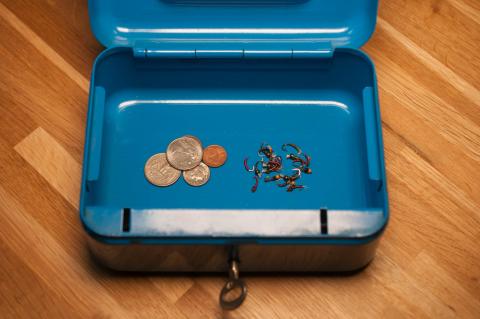
A money box
The GFF money box

… I have a small favor to ask.

Long story short

Support the Global FlyFisher through several different channels, including PayPal.

Long story longer

The Global FlyFisher has been online since the mid-90's and has been free to access for everybody since day one – and will stay free for as long as I run it.
But that doesn't mean that it's free to run.
It costs money to drive a large site like this.
See more details about what you can do to help in this blog post.