Recent comments
Jan,
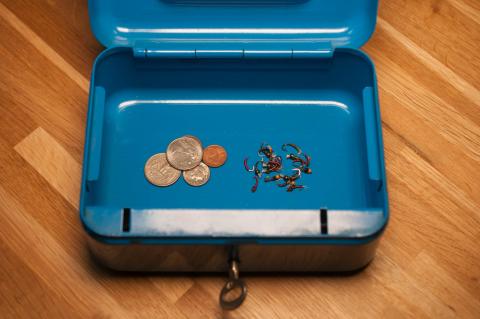
The substance is from Loon and is called UV Fly Paint. It's available in three colors, and can be cured with a UV lamp or simply by leaving it in the sun.
The small lump will both act as a colorful strike point and keep the wing and tail from getting jammed into the hook, where it can sometimes get stuck. Simply add the substance to a number of hooks and let them dry/cure and you have them to use on all your tube flies.
Martin
- Log in to post comments
Martin & Ken,
on some flies or better hooks you use some red or green waxy looking colour as a biting spot, what are you using for making them? Thanks in advance.
Jan
- Log in to post comments
Eunan, this is a wonderful fly! I think it is your best streamer I have seen. You outdid yourself on this one! Congrats!!
- Log in to post comments
Thanks Kelly....its the favorite of the streamers I've tied.
- Log in to post comments
JIm's smelt pattern is a very good one. I tye this one, and several other of Jim's patterns.
- Log in to post comments
An excellent streamer.
As a smelt pattern it looks like the real thing.
- Log in to post comments
lol!!!!! "The three stooges", wow!!! The places where the trout were caught are so obvious ( for trout fiherman)!!!!!
- Log in to post comments
How can we get these in the US. Really need the preformed crab bodies for redfish in the gulf
- Log in to post comments
hey i was wondering what the official name of that song you had in the background was. "throught the night"?.
- Log in to post comments
Rick,
As mentioned in the article, you take it easy, cast with large open loops and use the wind to your advantage, having it from the back or from your "good" side, meaning on the opposite shoulder of your casting side. If you are a right hand caster a wind from the rear left will be a great help. And don't be too ambitious. Start with two flies and a shorter leader setup, and you will make things easier to yourself.
Martin
Rick,
I'm afraid that's like asking "what's the best car?". It depends... are you driving a race, fetching the kids at school or moving a piano?
Same thing with flies. It depends on circumstances, season, water conditions, weather, what the fish are eating, location and much more. You will have to ask locally (in flyshops), look at what other anglers are using, read books and magazines, go with some one who knows.
Martin
How do you cast/present to avoid tangles?
Many thanks Rick
As a fly fishing novice I am in search of the best fly: wet, dry, tie - to use in cold conditions - air/water temperature?
Many thanks
Lovely fly. The colors are outstanding. You did a great job on this fly!
- Log in to post comments
Thanks Kelly. This was my fav of the first three in the series. I'm going to see how the fish like them in two weeks here. My 50th b-day present is a week on Mooselook so I'm pretty excited about that.
- Log in to post comments
Great pattern Rick. Tied a dozen and fished it behind a Hendrickson Comparadun a couple weeks ago. Caught 14 beauties at Limestone, 11 on the midge and 3 on the dry. Worked great on the Farmington too!!.
- Log in to post comments
Martin,
your answer doesn't confuse me, on the contrary, you gave some answers and/or advices I was hoping to get:
- tie some nice looking flies, go fish and see what happens!
- I have often simply chosen flies that I like and that "seemed right".....
My question intended, that I like the Sunray Shadow style a little bit more - it's only a question of taste for me and I really love shrimp flies on double or single hooks.
So your answer will really help me to fish "my" flies with more faith and so the danger of thinking "did I tie the right ones?" will hopefully be diminished.
Thanks for that.
Jan
- Log in to post comments
Jan,
No question is too basic, and yes there is a difference... but like with all other aspects of fly tying and fly fishing, it's subtle and personal and maybe without real consequence when you fish!
The right fly style is the one that works (duh!).
The Sunrays work well in almost all waters all over the world - Iceland, Russia, Norway, Sweden, Denmark, Canada.
The smaller flies also work in Iceland. Clear water and sometimes spooky fish call for weapons of a smaller caliber.
In the Danish and Swedish waters, which are often quite peaty and dark, people tend to select bushier and darker, brown, red, burnt orange and black flies while anglers in other places like the UK, Ireland and Scotland often select slimmer and brighter flies while the Norwegian and Russian preference is often larger. Colors are important I think, because the visibility of the fly relies on its color in comparison the the water color. In clear water all flies are easily seen, and people seem to go down in size. At night people select dark flies, often black - and large and bushy.
My personal experience is slightly offbeat, and depends on how limited my number of salmon fishing trips has been. I still have a notion that it's like with most other types of fishing: if the fish are biting, the fly choice isn't really that important.
Getting the fly to fish right is much more critical, fishing in the right depth, the presentation, not spooking the fish, the swing, fishing up- or downstream can have a much larger impact on your success than selecting exactly the right fly. Size can matter, and so can color as already mentioned and to some extent weight, but the exact style - slim, bushy, mobile, stiff - doesn't seem to me to play a really large role. I have often simply chosen flies that I like and that "seemed right" based on my own feeble logic and managed to produce fish, and at other times followed tradition and guide's advice and been skunked.
Unfortunately experience and routine is something that comes with... experience and routine, which equals hours on the water, and those of us that can't get enough hours will either have to listen to the locals or take the long shot and guess our way. The latter has often worked for me. Fish aren't that wise, and a somewhat skilled angler should be able to get them to bite - if they are in the mood.
The basic message is probably: tie some nice looking flies, go fish and see what happens!
Hope this long reply doesn't confuse more than it explains. Other more skilled salmon anglers might be able to chip in with more "reality based" answers.
Martin
- Log in to post comments