Simple Flyfishing for Common Carp in the Heart of America
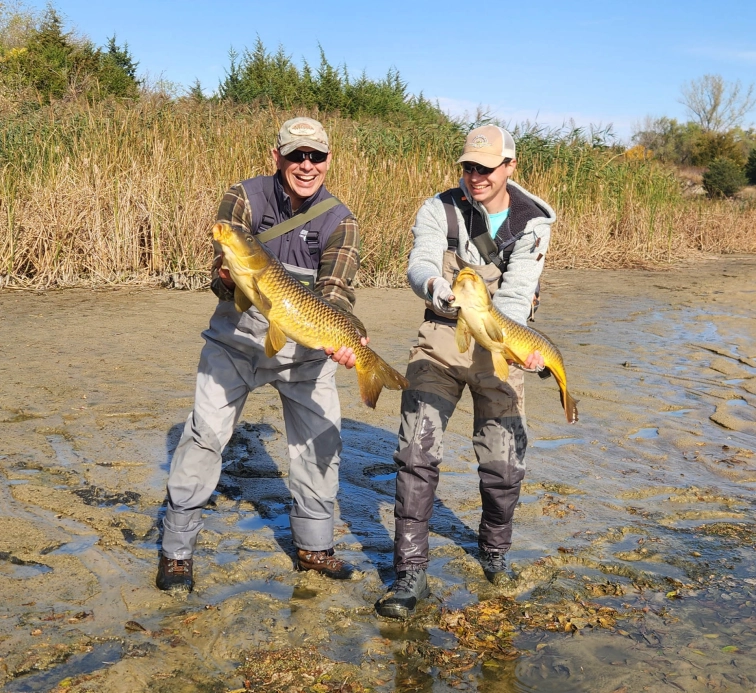
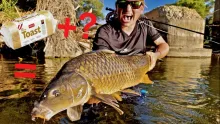
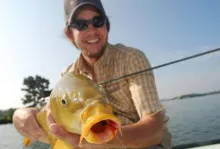
Around the Globe, Flyfishers and others have chased the Common Carp through streams, creeks, rivers, ponds, lakes, and reservoirs. In the States, this challenging fish goes unnoticed for its fishing potential despite its size, extensive feeding habits and ever-increasing range; to say little about its ability to pull deep into your backing. Though very common, it is most often overlooked especially here in Nebraska. In fact, as many would attest, it is detested as it is a pervasive invasive species. Here lies the beauty of this fish for flyfishers, nearly every puddle and most riffles contain decent populations of Common Carp and most have never seen a fly.
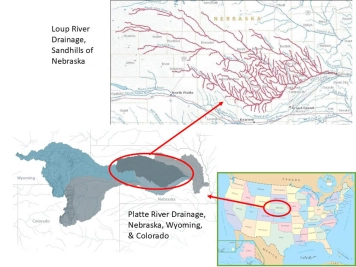
Nebraska is located in the heart of America and subjected to nearly constant winds, hot summers (85-105 F or 29-40.5 C) and cold winters (0-32 F or -17-0 C). Three drainages dominate Nebraska, which is roughly twice the size of Portugal. Two of these, Niobrara River and Platte River both flow eastward to the Missouri River, one of United States’ largest rivers and serves as the State’s eastern boundary.
We focused on flyfishing on the North Loup River and its tributary the Calamus River which ultimately flows into the Platte River targeting multiple species. It’s the dogged pulling of the Carp that we have targeted.
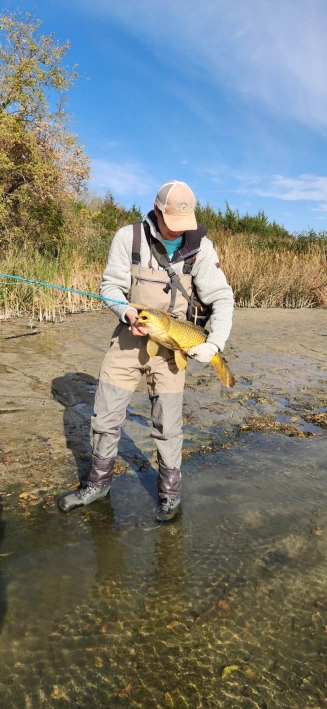
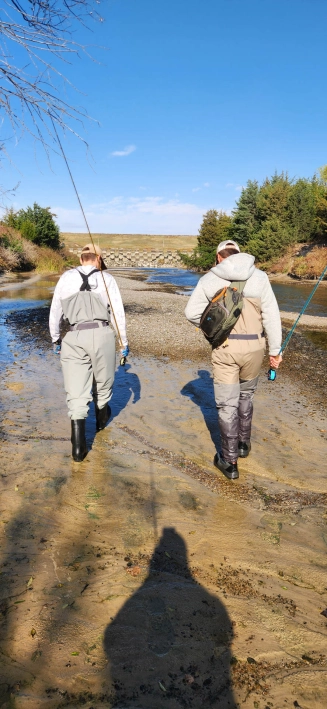
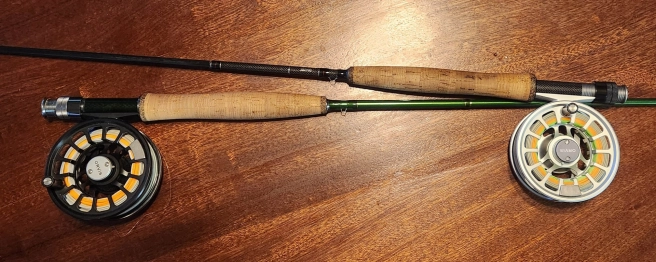
We have chased these “Prairie Bronze Trout” all year long using 3 and 4 weight rods up to 6 and 8 weight rods. Our “go-to” rods are 6 & 8 wt Fenwick Aetos Rods and 5 wt Maxcatch Premier Rods. We primarily throw weight forward floating lines such as Rio Gold, Orvis Bank Shot, and SA Mastery held on Orvis Hydros Reels. Most locations are sandy bottoms which require constant “line awareness” to prevent damaging your lines on the abrasive substrate.
Typical leaders include 7ft (2.1m) and 9ft (2.7m) 3x leaders with 12 to 18 inches (30.5 cm to 46 cm) of Seagar fluorocarbon tippet in 6 lb (2.7kg) or 8 lb (3.6kg). Fluoro gives us a stealth advantage and helps sink the fly while being abrasive resistant. When slinging floating flies, we use Maxima Ultragreen in the similar sizes.

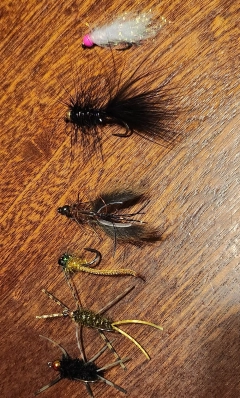
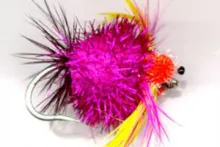
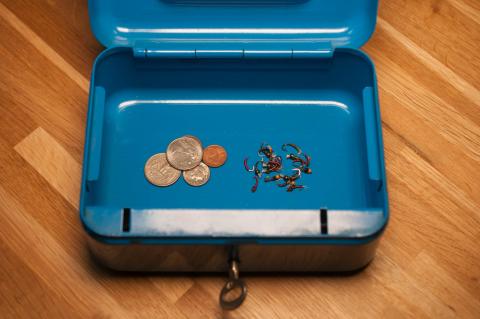
We found carp were not very picky about flies. Floating flies, subsurface flies, and flies that ride in between all caught fish. Beefy trout nymphs and egg patterns will attract carp attention. Typical flies we use include Carp Candy, Pat’s Rubber Legs, Wooly Buggers, and a dubbing minnow pattern we call a Russian White. This Russian White accounts for 30% or more of our fish. Hook sizes vary between size 4 and 12. Heavy wire is a must as smaller normal hooks bend easy. There is a definite correlation between using a non-slip loop knot and classic fisherman’s knot for these flies listed, one particular session we had 25% more hook ups using the non-slip loop knot while using the same fly.
I “discovered” the Russian White while guiding for North American Grayling (I can see many GFF adherents rolling their eyes). It gets hammered. For Grayling, we used hook sizes 10 to 14, but Carp we use hook sizes 4 to 10 with size 6 being the most common. We found Orientsun hooks (OS 7246) are “fin-tastic” being very sharp and strong.
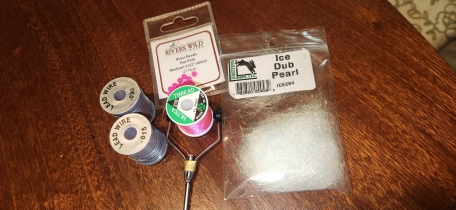
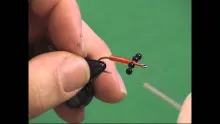
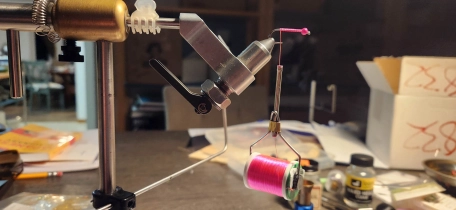
We use a corresponding hot pink bead and depending on current or desired sink rate we add a few wraps of lead wire. We then cover the lead wraps and shank in UTC Fluorescent Pink just past the hook point. Create a dubbing loop just ahead the hook point. Add Pearl Ice Dub to the loop. I prefer a thin or light amount of dubbing. It produces a more translucent and flowing body that displays the fluorescent pink underwrap. Bring the dubbing loop forward. I often pause and stroke the fibers of the loop rearward. Bring the dubbing loop forward touching the bead. Whip finish. Brush the dubbing to untrap fibers and angle them rearward. Go fishing.

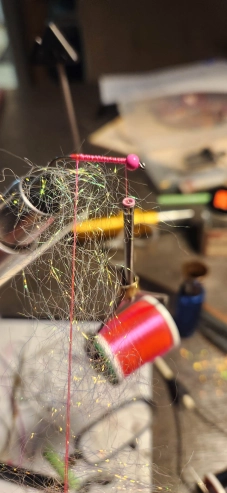
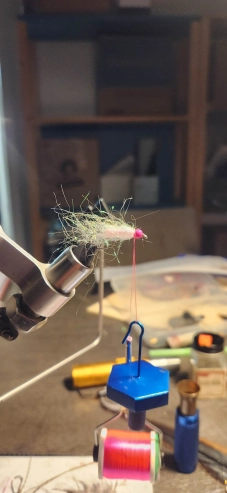
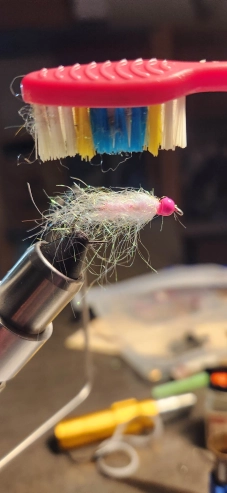
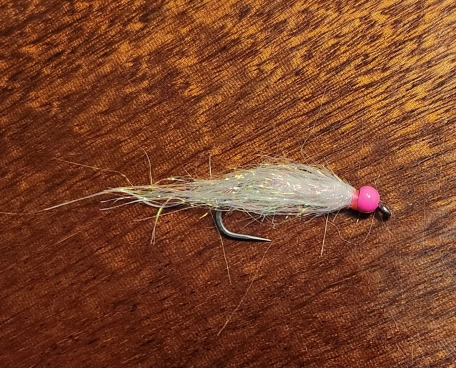
Other colors that work well include Ice Dub Black, Peacock, Olive Green, Gold, and Brown. Fly Tyer’s Dungeon Arctic Wind fibers are fantastic as well. Arctic Wind fibers tend to be wispier and longer than Hareline’s Ice fibers. White is the undisputed champion in our waters. Changing the pink thread for Fluorescent Orange thread and beads works well too.
Fishing the banks consistently produces the most fish. Based strictly on water conditions, aiming your casts 3 to 4 feet in front of the fish and at an angle to direction of the moving fish improves hook up rates. On average carp will only chase flies for short distances. As such, it is a balance between casting close and casting too close. We often sight fish but blind casting can work along structures such as riprap or sandbar drops.
Common Carp are extremely plentiful across Nebraska and across the States. If you are looking for a unique experience, it’s pretty hard to beat the Sandhills of Nebraska.
If the drug is the tug, it’s tough to beat carp on the flyrod.
I can be reached at Flippingrooveflies@gmail.com
- Log in to post comments