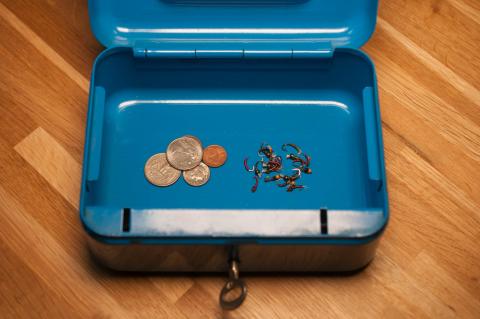
Mika Fly
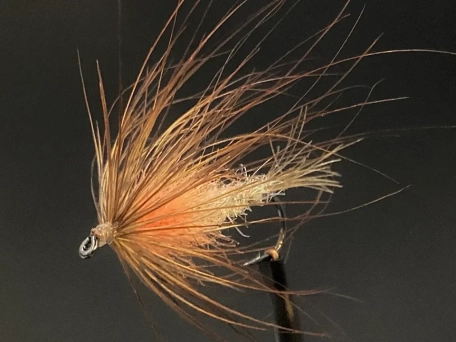
The German Mika-Fliege – or simply the Mika Fly – is a versatile coastal sea trout fly for every season
The Story Behind the Mika Fly
My goal was to create a fly that would consistently catch sea trout during the spring and fall - the two seasons when I spend most of my time fishing the coast.
I designed and tied the Mika Fly in 2015 to celebrate the birth of our son, Mika.
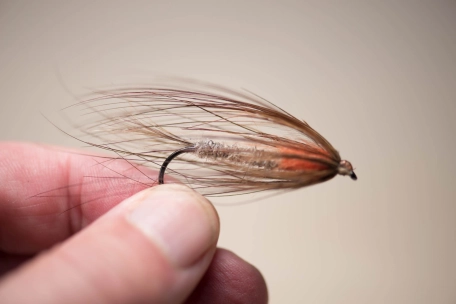
The carefully selected tying materials create a balanced combination of subtle, natural colors and contrasting accents. The fly is tied lightly and sparsely, allowing it to breathe and move freely in the water, where it produces an enticing, lifelike action.
Once you have the necessary materials, the Mika Fly is easy to tie with a little practice.
Tying the Mika Fly
1. Adding Weight for a Stable Swimming Action
After laying down a foundation of thread on the hook shank, tie in a piece of 0.35 mm lead wire approximately 5-6 mm long beneath the center of the hook shank. Adjust the length according to how much weight you want.
This allows the Mika Fly to reach the desired fishing depth while giving it a stable, balanced swimming action in the water.
2. The Wild Boar Bristle Tail
Next, tie in the tail using four or five wild boar back bristles. These bristles taper naturally into extremely fine tips, creating a remarkably realistic appearance. Their delicate, natural profile contributes greatly to the overall impression of the fly once it is submerged.
3. Forming and Securing the Body
The body is made from a simple but carefully chosen dubbing blend consisting of approximately two-thirds light-colored wild boar underfur and one-third light hare's ear dubbing.
For the Mika Fly, I prefer using light-colored wild boar underfur. Underwater it has a slightly translucent appearance that gives the fly a subtle, natural look and makes it especially attractive to sea trout.
Why This Dubbing Blend?
Blending the wild boar underfur with hare's ear dubbing makes it much easier to work with when applying it to the monofilament thread.
For the Mika Fly, I intentionally use clear monofilament tying thread.
The greatest advantage of monofilament is that, after the body has been secured with reinforcing crisscross wraps, the thread becomes virtually invisible. Only the dubbing remains visible, resulting in a very clean and natural-looking body.
The disadvantage is that monofilament is extremely smooth. Wild boar underfur is also naturally more difficult to handle than standard dubbing materials. As a result, the two together require a little more patience during the tying process.
Even so, I gladly accept this small inconvenience because I believe the finished result more than justifies the extra effort.
Without Boar
If you don't have access to wild boar underfur, the Mika Fly can still be tied successfully using only light-colored hare's ear dubbing for the body.
To help the dubbing adhere to the smooth monofilament thread, I first apply a light coat of tying wax.
I then spin the dubbing blend onto the thread evenly, using only a small amount of material and working it carefully between my fingertips.
This requires a little more effort than spinning conventional dubbing, but the result is a slim, durable body with an attractive texture.
Reinforcing the Body
Before wrapping the dubbed thread onto the hook, I coat the entire hook shank with head cement.
Immediately afterward, while the cement is still wet, I wrap the dubbed thread forward and shape the body directly into the fresh adhesive.
This provides a significant advantage: In a single operation, the tail, the lead wire, and the entire dubbing body are securely locked to the hook shank.
Once the body has been formed, I reinforce it with additional crisscross thread wraps. These wraps serve two important purposes.
First, they greatly increase the durability of the Mika Fly.
Second, they help maintain the fly's slim, streamlined body profile.
As a final step, I lightly brush out the body. This gives the fly a softer, more natural appearance while teasing out a few fibers that add subtle movement underwater.
The combination of translucence, texture, and gentle movement is an important part of what gives the Mika Fly its distinctive character.
A Varied Orange Hot Spot
4. The Orange Hot Spot – A Modular System
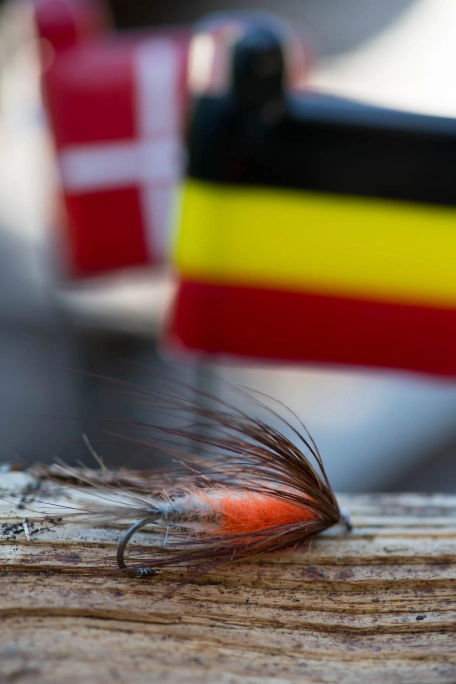
At the front of the hook shank, just behind the eye, the Mika Fly always features an orange hot spot tied from synthetic dubbing.
The size of this hot spot is intentionally varied, and I tie it in several different proportions. Each variation changes the visibility and overall appearance of the Mika Fly as fish see it underwater.
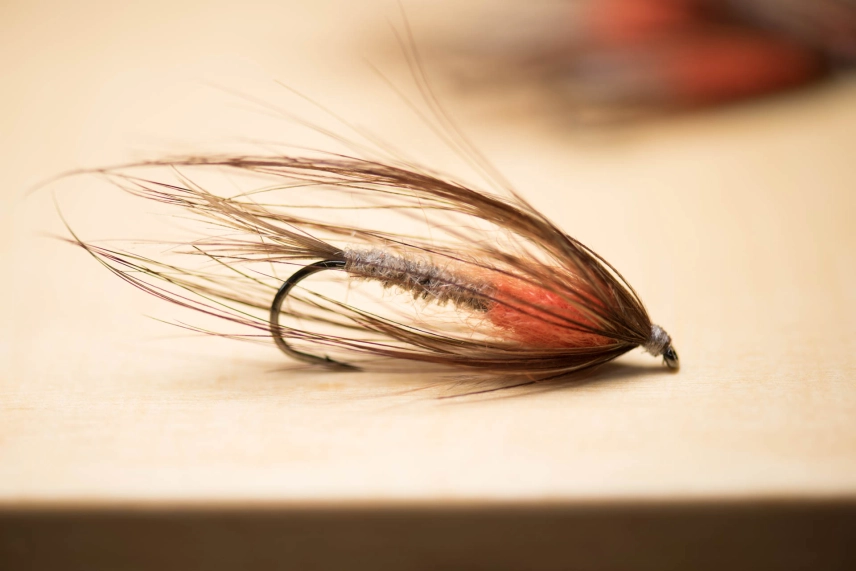
Sea trout do not always respond the same way to the same fly pattern. Their reactions are influenced by a variety of factors. The time of year, water temperature, and prevailing weather conditions all play an important role. Water clarity in the area being fished is equally significant. For that reason, I select the version of the Mika Fly that best matches the conditions I encounter along the coast. The different sizes of the orange hot spot make the Mika Fly an exceptionally adaptable and versatile fly pattern.
During the colder months along the Baltic coast - or whenever the water is stained or visibility is reduced - I frequently fish versions with larger, more pronounced hot spots. Those brighter patterns are easier for fish to locate under difficult conditions.
When the water is exceptionally clear, particularly during the warmer summer months, I generally switch to flies tied with smaller, subtler hot spots. In clear water, a more restrained appearance often proves more convincing.
Over the years, this approach of varying only the size of the orange hot spot has developed naturally through practical experience and has consistently proven successful. Today, I think of it as a modular system.
Rather than constantly changing fly patterns, I can simply select the version whose hot spot best matches the existing conditions while preserving everything else that gives the Mika Fly its distinctive character.
The Front Hackle
5. The Pheasant Back Feather – Creating the Fly's Silhouette
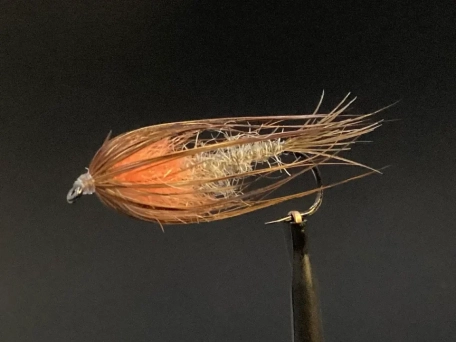
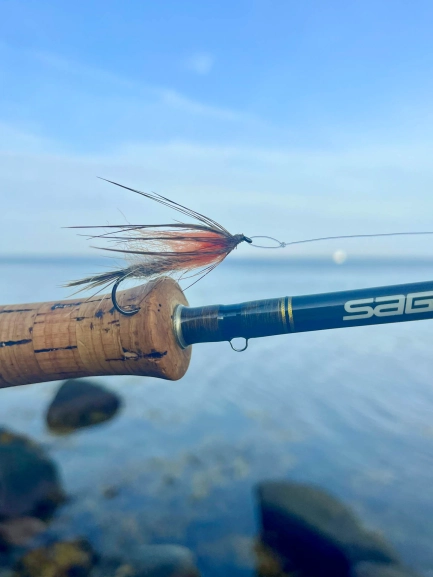
The finishing touch on the Mika Fly is a carefully selected, generously sized back feather from a male ring-necked pheasant. These feathers possess long, elegant hackle fibers that create beautiful movement in the water. In terms of stiffness, I would place them somewhere between a soft Spey hackle and a stiffer rooster hackle. That balance provides exactly the kind of movement I was looking for.
Every pheasant is unique, and so is every feather. The color palette of these back feathers ranges from light brown to dark brown and rusty brown. Occasionally, nature also produces feathers with a subtle metallic sheen or delicate speckled markings.
From a practical standpoint, all of these natural color variations have proven equally effective. Every one of them has caught fish, so there is no need to search endlessly for one "perfect" feather. Instead, I focus on selecting a feather with long, evenly shaped fibers that complement the proportions of the fly.
The feather is tied in a short distance behind the hook eye.
These wild, natural feathers from a ringneck pheasant with their long hackle fibers work really well with the Mika Fly. However, after a day of fishing with contact with fish, this can be seen in the Mika Fly in the form a thinned hackle collar. This isn't a deal-breaker, though; the Mika Fly continues to catch fish even in this sparse state. But does anyone know of a more durable alternative with the same properties and visual characteristics as these natural pheasant feathers?
Partially Hiding the Hot Spot
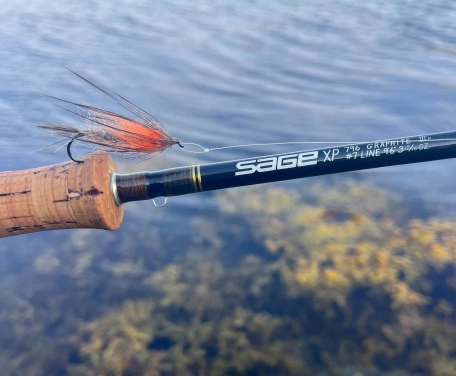
Ideally, the tips of the hackle fibers should extend all the way to the end of the Mika Fly's tail. This allows the orange hot spot to remain partially hidden behind the moving fibers. As the fly swims through the water, the fibers constantly open and close. The orange beneath them appears and disappears in a subtle, almost shimmering way. This interplay creates the distinctive silhouette of the Mika Fly.
Rather than presenting a bright splash of color all at once, the fly reveals only brief flashes of orange as the hackle fibers move naturally with the current and during the retrieve. I believe this subtle effect contributes significantly to the fly's attractiveness. It creates just enough visual stimulation to provoke a response without appearing unnatural.
Over many years of fishing, this design has repeatedly proven itself under real fishing conditions.
Andreas Jendrichowski
A Practical Tip
Older electric coffee grinders from the 1980s are excellent tools for blending different dubbing materials quickly and evenly.
They produce a consistent mixture in only a few seconds and are particularly useful when preparing larger quantities of dubbing in advance.
The Mika Fly in the Water
Once submerged, the Mika Fly takes on a completely different appearance than it has while dry.
The brushed body becomes slightly translucent, the pheasant fibers come alive with movement, and the orange hot spot glows subtly through the hackle.
Together, these elements transform the pattern into a versatile attractor fly that has consistently caught sea trout along the coast throughout the year.
Every component of the fly has been selected with this underwater impression in mind.
The Mika Fly is not intended to imitate one specific prey item.
Instead, it combines natural movement, translucence, subtle contrast, and an attractive silhouette into a pattern that repeatedly triggers strikes from sea trout under a wide variety of conditions.
Fishing the Mika Fly
Presentation, Strategy, and Practical Experiences
When I first developed the Mika Fly, I fished it exclusively for sea trout during the spring and fall. Those two seasons had always been my primary focus for coastal fly fishing, and the Mika Fly was originally intended as a specialized pattern for those conditions. However, with every fish I landed, my confidence in the fly continued to grow.
Each successful outing reinforced the impression that I had created something capable of performing under a wide range of circumstances. Over time, I began reaching for the Mika Fly more often, even when I might previously have selected another pattern. Eventually, I started fishing it during the summer months as well.
I found it especially effective during the first light of dawn and again in the evening when the light became soft and subdued. During these low-light periods, the fly repeatedly proved capable of enticing aggressive strikes from actively feeding sea trout. Its understated silhouette, combined with the subtle flashes of orange from the hot spot, seemed particularly convincing under those conditions.
A Memorable Summer Fish
One experience stands out more clearly than many others.
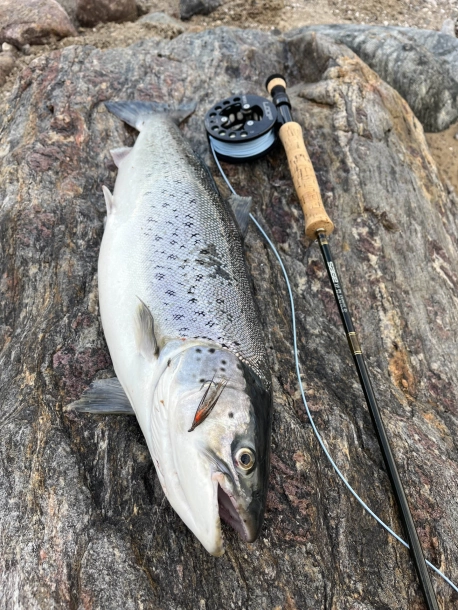
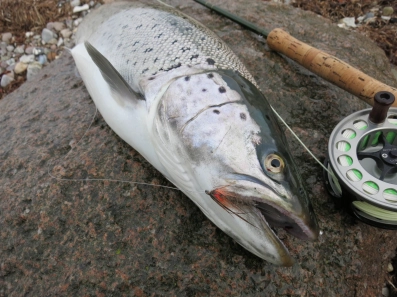
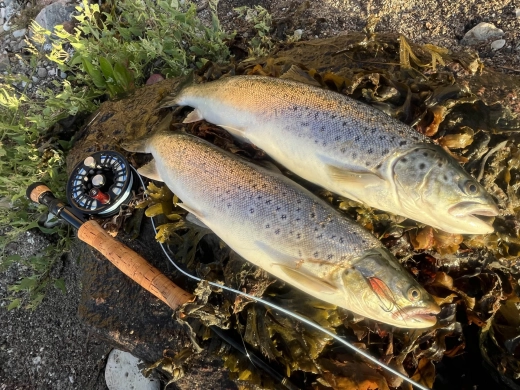
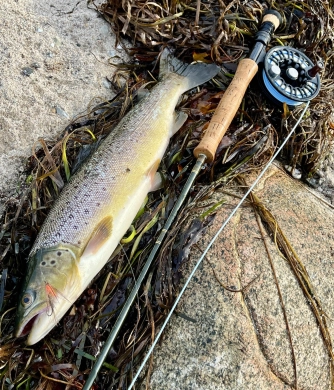
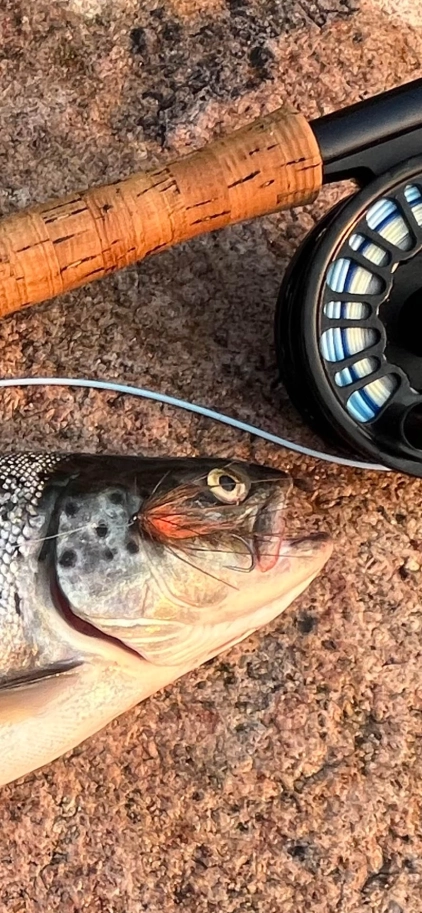
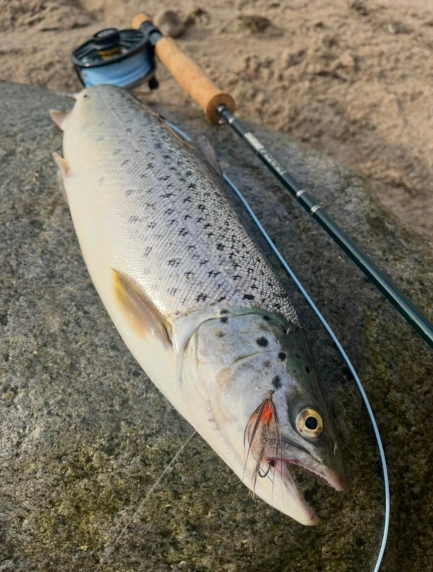
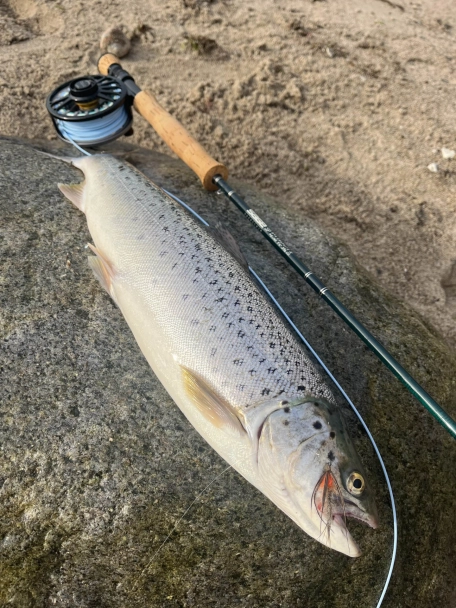
On August 2nd, 2025, during a warm midsummer day on the eastern coast of the island of Langeland, I was fishing with a fly rod when a bright silver summer sea trout took the Mika Fly. The fish measured 65 centimeters (25.6 inches) and weighed 3,100 grams (6.8 pounds). After an exciting fight, I was able to bring the fish safely to hand.
Experiences like that strengthen your confidence in a fly pattern.
They demonstrate that a fly originally designed for spring and fall can perform equally well during the height of summer when conditions are right.
Fishing the Mika Fly Throughout the Year
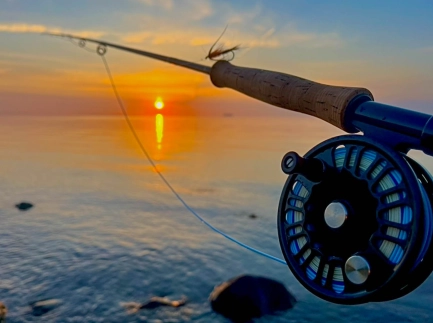
Today I fish the Mika Fly during every season of the year. It has become my first choice whenever I target sea trout along the coast. The fly performs equally well whether it is fished behind a Spirolino (AKA casting or bubble) float or presented on a fly rod. Its slim profile, natural movement, and adaptable hot spot allows it to remain effective under a remarkably wide range of conditions.
When fishing the Mika Fly with a fly rod, I generally retrieve it using relatively short, somewhat irregular strips. I deliberately avoid retrieving the fly at a perfectly consistent pace. Instead, I prefer a presentation that allows the fly to accelerate, pause, and move naturally through the water. This creates a more lifelike impression and often provokes strikes from following fish. The speed of the retrieve always depends on the conditions.
During colder months, when sea trout are generally less active, I slow the retrieve considerably. As the water warms and fish become more aggressive, I retrieve the fly somewhat faster.
Rather than following a fixed rhythm, I allow the season, the water temperature, and the fish themselves to dictate how I fish the fly. That flexibility has consistently proven successful over the years.
Confidence Earned on the Water
No fly becomes a favorite overnight. Confidence is built through experience. Every successful day on the water adds another stone to that foundation.
The Mika Fly gradually earned my trust because it continued to produce fish under many different conditions and throughout every season. That confidence eventually changed the way I approached coastal fishing. Instead of constantly changing patterns in search of the "perfect" fly, I found myself spending more time concentrating on presentation, water conditions, and fish behavior.
The Mika Fly allowed me to fish with confidence, knowing that I had complete faith in the pattern tied to the end of my leader. For me, that confidence has become one of the fly's greatest strengths.
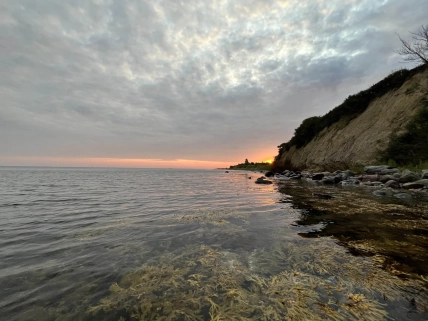
My All-Around Coastal Fly
Today, I consider the Mika Fly my all-around coastal fly. If I had to describe it in just a few words, I would call it an attractor pattern. It wasn't originally designed to imitate a specific baitfish, shrimp, or marine insect. Instead, its purpose is to trigger an instinctive reaction – a strike driven by curiosity, aggression, or opportunity. That philosophy has shaped the fly from the very beginning.
Over the years, the Mika Fly has proven that it can consistently tempt fish under an exceptionally wide range of conditions. Its combination of translucent natural materials, subtle movement, carefully balanced proportions, and the variable orange hot spot has repeatedly convinced me that a fly does not have to be complicated to be highly effective. In fact, I believe its simplicity is one of its greatest strengths.
Every material has a purpose.
Every proportion has been chosen deliberately.
Nothing has been added merely for appearance.
The result is a fly that has earned my confidence through years of practical experience rather than theory.
More Than Just Sea Trout
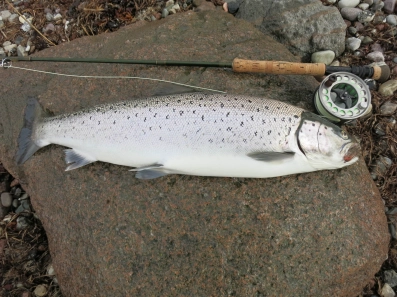
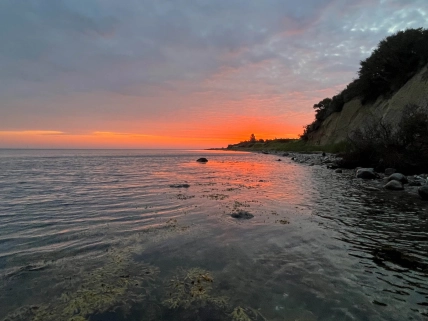
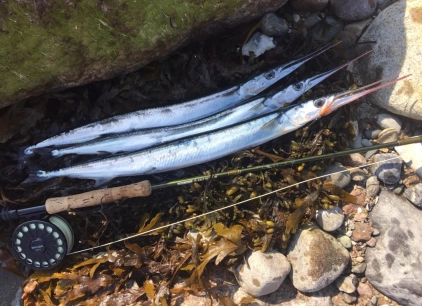
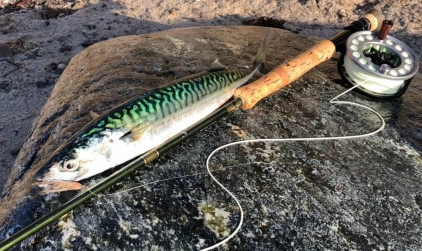
Although the Mika Fly was developed specifically for coastal sea trout, it has repeatedly demonstrated that it is capable of much more. Along the coast of Langeland in Denmark, it has accounted for bright silver sea trout measuring well over 70 centimeters (28 inches). Those fish alone would have been enough to justify a permanent place in my fly box.
But the story does not end there. Over the years, the Mika Fly has also proven successful on several other species. Among them are:
- Wild steelhead
- Rainbow trout
- Garfish
- Atlantic mackerel
Every one of these species has reinforced my confidence that the fly's design appeals to predatory fish far beyond the original target species. Although sea trout remain its primary purpose, I have learned never to underestimate the versatility of a well-balanced attractor pattern.
A Permanent Place in My Fly Box
Many fly patterns enjoy a brief period of success before eventually being replaced by newer ideas. The Mika Fly has followed a different path. Year after year, it has continued to justify its place in my fly box.Today, it sits alongside two other flies that I trust completely:
- PG Reje (PG Shrimp)
- Langeländer Pølse Flue (Langeländer Sausage Fly)
Together, these three patterns cover the majority of situations I encounter while fishing the coast.
Whenever I head for the Baltic shoreline, the Mika Fly is always with me. It has become one of the flies I reach for first - not because it is new or unusual, but because it has repeatedly earned my confidence through consistent results. For me, there is no better recommendation than that.
A Final Word ...
My web site LANGELAND FLYFISHING is much more than just a website or a collection of fly patterns. It is a project that is very close to my heart.
My goal has always been to share information, practical experience, and knowledge with other anglers. Over the years, I have learned a great deal from spending countless hours on the coast, observing fish, experimenting with different fly patterns, and learning from both successes and failures. That knowledge has value only if it is shared. For that reason, I present my flies exactly as they have evolved over time.
I don't keep successful patterns secret, nor do I deliberately leave out important details. Instead, I want to show every fly honestly and exactly as I fish it today. Every pattern on this website reflects years of practical experience rather than theory. Some ideas worked immediately. Others required countless hours of testing before they became what they are today.
The Mika Fly is one of those patterns.
It did not become my favorite overnight. It earned that place through years of fishing under a wide variety of conditions. Every improvement, no matter how small, came from time spent on the water rather than at the tying bench.
I Am Happy to Share the Mika Fly
If you enjoy tying flies, I invite you to tie the Mika Fly yourself.
Take it to the coast.
Fish it with confidence.
Adapt it to your own waters and your own experiences.
Perhaps it will become as successful for you as it has been for me. Nothing would make me happier than knowing that another angler has caught memorable sea trout on a fly that I have openly shared.
Knowledge grows when it is shared.
Your Feedback Is Welcome
I always appreciate honest feedback. If you tie the Mika Fly and fish it yourself, I would be delighted to hear about your experiences. Whether your observations involve tying, presentation, fishing conditions, or memorable catches, every bit of feedback helps expand our shared knowledge.
You're welcome to send your experiences and catch reports in the comments below.
I genuinely look forward to hearing how the Mika Fly performs in waters beyond those I know myself.
Tight Lines
I wish you many wonderful hours along the coast.
May every outing bring new experiences, memorable moments, and perhaps the sea trout you've been hoping for.
Above all, I wish you tight lines and the confidence to believe in the fly at the end of your leader.
Petri Heil & Knæk og Bræk!
(The traditional German and Danish ways of wishing fellow anglers and fishermen good luck.)
This article was translated from the original German article found on Andreas' web site. AI was used for the basic translation, but the raw translation has been thoroughly edited and adapted by me and approved by Andreas.
- Log in to post comments