Dec 28. 1995
When stacking materials it is important to consider it as consisting of more than just one process. There are several steps involved: material selection, cleaning and preparing, selecting the right tool and performing the stacking process itself.
Dec 14. 1995
Muddlers are a type of flies that I love to tie and fish with. And they also catch fish. In my small story from the Danish summer night, you can read what this small modest muddler can do. A fly I had a fair success with
Dec 1. 1995
We at GFF wish that more people made books like this: small and affordable and right on the target. Ken Hanley's small classic has been reprinted
Nov 1. 1995
These are some pictures from my visit to the North West - Seattle, where I had the pleasure of fishing with some very nice people in the early winter 1995.
Oct 14. 1995
A great Danish fly for sea trout - The classic Magnus
Sep 10. 1995
This fly is in a way my 'signature fly'. It's a beautiful fly (in my own humble opinion), and even though it's heavy - very heavy, actually - it's a good fishing fly, that dives deep and overcomes current and turbulence.
Aug 20. 1995
The book is actually quite systematic. Dave Whitlock deals with all important fresh water trout food species; from mayflies, caddisflies and stoneflies to fish, scuds, shrimps and leeches. Every group is descibed in detail: life cycle, which is very important to understand -- especially when it comes to insects, morphology, habitus and how to imitate them.
Jun 26. 1995
This is a very quotable book. I like short, concentrated books, that don't waste too much time on repetitions and smalltalk. Mr. Pryce-Tannatt is a writer just after my heart, when it comes to that. He does not beat around the bush and talk in length about things that don't concern the subject.
Jun 23. 1995
This small book has made me a striper fan. The subtitle gave me the first hint that this would be interesting
Jun 13. 1995
Dutch fly fisher and tyer Sepp Fuch's pictures.
Jun 12. 1995
Saturday evening was as Saturday evenings often are in the summer: kids playing outside, tidying the kitchen, having a cup of coffee and just looking out the window. Outside my kitchen window, I can see my 'wind tree'. My guess is that all Danish coast fishermen have a wind tree or something like it: a flag, a chimney -- something to judge the wind from. Force and direction.
Jun 1. 1995
The key to success in the pursuit of sea trout in salt water on the coasts of the Baltic Sea is understanding some important aspects of the trout's behavior in respect to the seasonal changes. The sea trout i salt water can't be fished the same way all year. Some key factors here are water temperatures, currents, the wind and the trout's migratory patterns.
Jun 1. 1995
Part of this section is the manuscript for chapter in a book on fly fishing in salt water in Northern Europe. The subjects covered here are also covered elsewhere on this web site. Each page contains links to all relevant pages on The Global Fly Fisher.
Jun 1. 1995
The garfish is a very common guest in many Northern European countries. It is normally a pelagic fish whose migration pattern is not known in detail. But one thing is for shure: these fish will return to spawn in shallow and rich areas along the coasts many places in Europe.
Jun 1. 1995
Cod and similar species are a much underrated quarry for the fly fisherman. In places where it's very common like Denmark and Norway, they are even sometimes considered an annoying disturbance in the much 'finer' fishing for sea trout.
But cod can be an excellent game for the fisher whose gear and mind is tuned in on it, and the abundance and size of fish can easily justify a more focused fishing for cod.
May 23. 1995
This is a book that I bought when attending a very well set up fly tying arrangement here in Denmark just after new year, and already at the arrangement I met two of the tyers featured in the book: Oliver Edwards (UK) and Mogens Espersen (Denmark).
May 12. 1995
I often wonder what US fishers do if they stumble on a really big fish that they want to net. I'm aware that many fishers land many - if not all - of their fish with the hands. I use the hands for all but the largest. But still it must happen that fishers strike on a brown trout or rainbow is much too big for these small snow shoe nets.
May 10. 1995
The fascinating thing about AK is, that you start believing him and that many of his methods make sense. His approach is very personal, and he doesn't try to hide this.
May 1. 1995
The fish in the Danish sea are in no way endangered by rodfishers. Nets are another story, though, but still fish are abundant, and therefore we Danes almost always bring home fish. Small fish are illegal to catch, but many fishermen release a lot of their catch. But no-kill and pure C&R is not common on the Danish shores.
May 1. 1995
Denmark is a small country; the size of Pensylvania, and can by no means be compared to the other and far larger Scandinavian countries; Norway, Sweden, Finland and Iceland.
May 1. 1995
Yes, I actually do cast my flies into the waves! And it's great too, even though I prefer them to be small waves.
May 1. 1995
The bottom is a main factor in the ocean. We have no trees, no meandering, no overhanging banks (almost none at least). The water covers it all and above that... the sky.
May 1. 1995
The bottom is like the beach. This is not always true, but generally the beach can be used to judge the bottom below the surface.
May 1. 1995
Fish are where they feel good. That is where one or several factors are present: food, shelter, optimum water conditions, other fish ...and more.
May 1. 1995
This should actually be rule number 4, but it's still a bit too vague to be so. It is based on my own and a lot of other fishers experiences, but still... Fishing is best when water is going out - and please notice, that this doesn't only refer to tidal movement.
May 1. 1995
Certain spots provide many positive factors for the fish: exposed coast with mixed bottom, sand and weed covered stones. Variation, shelter and food is here in plenty.
May 1. 1995
Once you have found a place where all these things come together, you still have a lot of water to cover. Luckily you can spot the places that will hold fish on an even smaller scale.
May 1. 1995
For your comfort when sea trout fishing you'll want a light wind from any direction or a heavier wind blowing away from the shore. Fish will be there in any wind and hard winds will often bring bigger fish that bite harder, but fishing can be tricky and tiring.
May 1. 1995
Water conditions change from day to day and one location varies from clear, calm water to muddy water with high waves. The fish are there almost no matter what, and often rough weather offer better fishing than a calm surface.
May 1. 1995
As all other kinds of fishing, the hunt for sea trout varies greatly through the year. But opposite many other fishing, there's no low season or high season.
May 1. 1995
Sea run brown trout can be fished in the Baltic during the summer too. Daytime fishing is possible, but evenings, nights and mornings excel.
May 1. 1995
The spring means activity in the Baltic where the winter fish start eating and the spawning fish return from the streams to the oceans
May 1. 1995
Autumn in the Baltic is ideal for catching top condition sea run brown trout, mornings, days and evenings.
May 1. 1995
Fishing for sea run brown trout in the Baltic during the cold months
May 1. 1995
Most Danes fish 7-8 wt. rods and lines. And most use a weight forward floating (WF-F) line or a shooting head. Expect that fairly long casts under difficult (that's mostly windy) conditions can save a day. All salt water flyfishing is done wading, and both waders and warm clothes for almost all seasons are essential.
May 1. 1995
Sometimes you can fish a location where the water is crystal clear and the surface is as a mirror, and sometimes exactly the same location is marred by hard wind, heavy waves and water as hot chocolate with marshmellows (yuck!).
May 1. 1995
"Points" are generally good landmarks to use as a base for the fishing. Not that there are necessarily more fish there, but as they make good mental holding points. Points are good spots to start fishing and from these landmarks you can make 'excursions'
May 1. 1995
A few tips of efficiently covering the water when fishing for Baltic sea trout
May 1. 1995
There are laws and written rules, but for the benefit of all of us, there are some unwritten common sense and social rules too:
May 1. 1995
There are laws in Denmark too, and some of the deal with fishing. The most important ones are these
May 1. 1995
When the sea trout is in salt water it's normally 'uncolored' meaning shining silvery with a bluish black back. Also the scales are normally many, but loose, and will fall off when the fish is touched. The fish is in an excellent condition, as it is eating all the time.
May 1. 1995
Just for your general orientation I've marked out a few good fishing spots.
Apr 20. 1995
There are a couple of new pictures in this section. I have once again experimented with the unknown and hidden beauty in the flies and materials that we use - aspects that can be brought out through computer manipulation.
Apr 20. 1995
An introduction to fishing on the Danish coast.
Apr 20. 1995
When you take into consideration the size and volume of this book: large format and app. 250 pages, and the fact that it 'only' deals with 20 flies, it should be obvious that each fly is described in minute details. And it sure is.
Apr 10. 1995
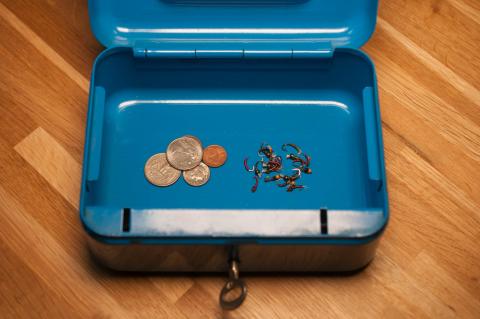
In the most simplistic terms, a flytying kit must only have the tools and materials necessary to tie the flies you may use on a single trip or a single river. However, like most of us, a travelling flytying kit consumes more space than 26 high-schoolers crammed in a Volkswagen Beetle.
Apr 5. 1995
With this book you get your moneys worth in weight. The book is a large format book with more than 300 pages. The size alone can make this book a bit scary, and innocent flytyers who leaf through it, will probably be intimidated by the huge volume of information.