











The Salmon Fly Proportion, Design & Layout Guide
The first rule of salmonfly tying is preparation... gathering your materials, laying them out and sizing up the situation.

By using the guide, you can easily size up materials ahead of time prior to tying them on the hook.
The first rule of salmonfly tying is preparation...gathering your materials, laying them out and sizing up the situation. If you are like me, many times you will have one material that is just a touch too short and you scramble to make it fit. But in the long run, it will never fit and the fly that you meticulously hovered over for many precious hours has that major flaw. More importantly, you'll never be happy with the finished product. If only you had pre-planned and sized up your materials ahead of time.
I used to tape a real hook to a white piece of paper and draw around it to get just the right proportions and to get a feel for the fly prior to assembling the materials. This was OK, but I always had to draw out a grid around the fly to ensure I was abiding by the unwritten rule that every proportion in a salmon fly must adhere to the 1-gape rule. Another problem was when I laid out my materials next to the hook, the physical hook got in the way. It would be much better if the hook and grid were pre-drawn for me. Thus, the creation of The Salmon Fly Proportion, Design and Layout Guide.

Use it to sketch out your next fly creation or to size up materials for an 8/0 fly. What ever the case, the hooks presented on the layout guide rnage from 2/0 to 8/0 in classic salmon fly hook proportions. Each hook is life-size and features a pre-drawn grid using the hook gape as the basis. Each grid block approximately equals 1/2 the hook gape in width and length.
Read more about why you should register.
Related content


More content from the front page





Since you got this far …
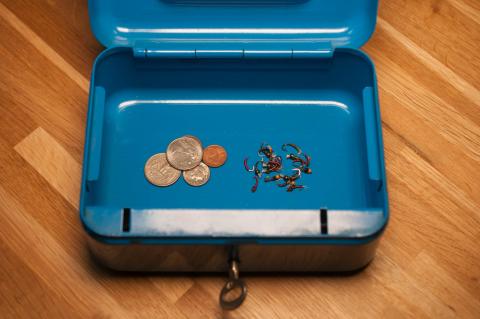
The GFF money box
… I have a small favor to ask.
Long story short
Support the Global FlyFisher through several different channels, including PayPal.
Long story longer
The Global FlyFisher has been online since the mid-90's and has been free to access for everybody since day one – and will stay free for as long as I run it.
But that doesn't mean that it's free to run.
It costs money to drive a large site like this.
See more details about what you can do to help in this blog post.
